 ChipApex | Global Electronic Components Supplier
SEARCH
Search Product
Search Post
— IC芯片 | 连接器 | 传感器 | 被动器件 —
Search productSearch post
— IC芯片 | 连接器 | 传感器 | 被动器件 —
Consult the customer manager about the wholesale price.
consultation hotline:86-132-6715-2157
email:[email protected]
Contact the product manager for consultation. One-stop consultation is available.
Do you want a lower wholesale price? Please send us your inquiry and we will reply immediately.
The MCP6S92-E/P is a dual-channel analog programmable gain amplifier (PGA) from Microchip Technology, housed in an 8-pin PDIP package. It supports gains from +1 V/V to +32 V/V via SPI control and features rail-to-rail input/output operation on a single supply of 2.5V to 5.5V. The device offers a typical bandwidth of 1 to 18 MHz, low noise density of 10 nV/√Hz at 10 kHz, and operates within an extended temperature range of -40°C to +125°C.
Verify the specific suffix 'E/P' corresponds to the PDIP package and industrial temperature grade (-40°C to +125°C). Confirm that the VREF pin is internally tied to VSS for this variant, which impacts power supply rejection ratio specifications compared to other family members. Ensure compatibility with standard SPI logic levels for your microcontroller interface.
Select the MCP6S92-E/P when dual independent channel amplification with digital gain control is required. It is suitable for applications needing flexible performance or multiple inputs without external discrete components. Consider the 8-pin PDIP package for through-hole prototyping or manufacturing requirements where surface mount options are not preferred.
This component belongs to the MCP6S91/2/3 family of single-ended, rail-to-rail I/O, low-gain PGAs. While the MCP6S91 is a single-channel device and the MCP6S93 uses a 10-pin MSOP package, the MCP6S92 specifically provides two channels in an 8-pin form factor. All variants share similar electrical characteristics but differ in channel count and physical packaging.
MCP6S91-E/P (Single-channel equivalent)
For the MCP6S92, the VREF pin is internally tied to VSS. This configuration means the Power Supply Rejection Ratio (PSRR) specification describes PSRR+ only, and it is recommended to tie the VSS pin directly to ground to avoid noise problems.
The maximum SCK frequency is 10 MHz when operating at VDD = 5V. In daisy-chain configurations, the maximum frequency is lower, approximately 5.8 MHz, due to propagation delay and setup time constraints.
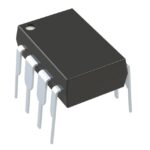 MCP6S92-E/P
The activity of extra discounts on wholesale prices is in full swing…
Please fill in your contact information and we will send you the latest wholesale price list.





