ChipApex | Global Electronic Components Supplier
SEARCH
Search Product
Search Post
— IC芯片 | 连接器 | 传感器 | 被动器件 —
Search productSearch post
— IC芯片 | 连接器 | 传感器 | 被动器件 —
Consult the customer manager about the wholesale price.
consultation hotline:86-132-6715-2157
email:[email protected]
Contact the product manager for consultation. One-stop consultation is available.
Do you want a lower wholesale price? Please send us your inquiry and we will reply immediately.
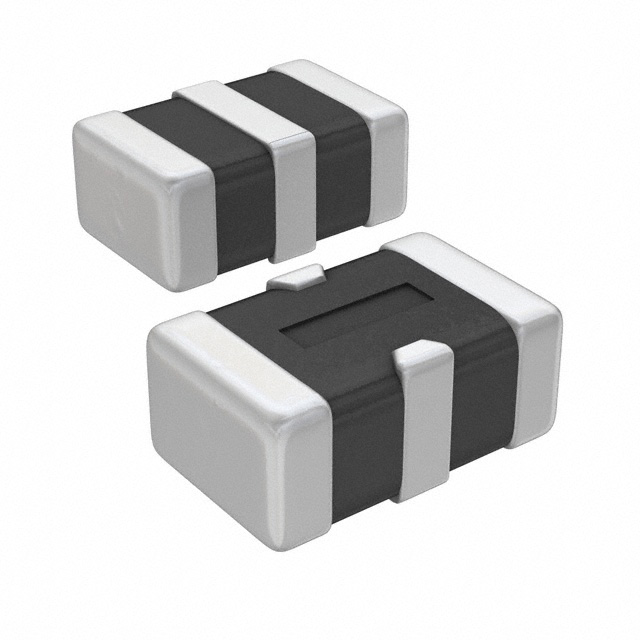
MEM2012V211RT001 is a third-terminal EMI filter from TDK's MEM series, designed for signal line suppression. It features an LC (Pi) topology with a cutoff frequency of 210 MHz. The component operates within a temperature range of -40°C to +85°C and supports a maximum current rating of 100 mA. Packaged in a compact 0805 (2012 Metric) surface-mount footprint measuring 2.0 x 1.2 mm, it utilizes a three-pad configuration for efficient PCB integration.
Verify the specific suffix RT001 to confirm tape-and-reel packaging and quantity specifications. Ensure compatibility with RoHS directives if required by your manufacturing standards. Cross-reference the datasheet for precise soldering thermal profiles to prevent component damage during assembly processes.
Select this component when signal integrity requires attenuation above 210 MHz while maintaining low insertion loss at lower frequencies. The 100 mA current rating suits low-power data lines rather than power distribution. Evaluate the 0805 footprint against available board real estate and consider the third-terminal grounding requirements for optimal performance.
This part belongs to TDK's MEM series of multi-layer ceramic EMI filters. These components utilize proprietary internal structures to achieve superior noise suppression in miniature packages. The MEM series is widely recognized for its reliability in consumer electronics and industrial control systems requiring effective RFI/EMI mitigation.
Consult official substitution guides for equivalent LC Pi filters with matching 210 MHz cutoff characteristics. Verify that alternative components support the same 0805 footprint and 100 mA current handling capabilities to ensure mechanical and electrical compatibility without redesigning the circuit layout.
The component utilizes an LC Pi-filter topology, which provides fifth-order low-pass filtering characteristics for effective noise reduction.
Yes, the MEM2012V211RT001 is a third-terminal filter, offering improved high-frequency performance compared to standard two-terminal designs.
 MEM2012V211RT001
The activity of extra discounts on wholesale prices is in full swing…
Please fill in your contact information and we will send you the latest wholesale price list.