 ChipApex | Global Electronic Components Supplier
SEARCH
Search Product
Search Post
— IC芯片 | 连接器 | 传感器 | 被动器件 —
Search productSearch post
— IC芯片 | 连接器 | 传感器 | 被动器件 —
Consult the customer manager about the wholesale price.
consultation hotline:86-132-6715-2157
email:[email protected]
Contact the product manager for consultation. One-stop consultation is available.
Do you want a lower wholesale price? Please send us your inquiry and we will reply immediately.
The Tamura MET-60 is a through-hole audio transformer designed for data and voice coupling applications. It features a primary impedance of 135 ohms and a center-tapped secondary impedance of 135CT ohms, maintaining a 1:1 turns ratio. The component operates within a frequency range of 300Hz to 100kHz with a response tolerance of ±2dB. Electrical specifications include a primary DC resistance of 10.5 ohms and a secondary DC resistance of 10.8 ohms. It supports a power level of 50mW and provides isolation voltage of 1500VRMS at 1 minute. The unit functions between -20°C and +85°C, with physical dimensions of 10.40mm length, 7.87mm width, and 11.80mm height.
Verify the specific ordering suffix against the manufacturer's current catalog to confirm pin configuration and packaging type. Ensure the selected variant matches the required center-tap availability and insulation standards. Cross-reference the datasheet revision date to confirm compliance with current RoHS directives and material declarations before finalizing procurement orders.
Select this component when a 1:1 impedance transformation is required between 135-ohm lines. Consider the thermal operating range and physical footprint constraints for PCB layout. Evaluate the isolation voltage requirements against system safety standards. Confirm that the center-tapped secondary configuration aligns with the circuit topology needs for balanced signal handling.
The MET-60 belongs to the MET series of ultra-wideband audio transformers manufactured by Tamura. This series is engineered for reliable performance in voice and data communication environments. The components are characterized by stable electrical parameters across the specified frequency band, ensuring consistent signal integrity in professional audio and telecommunications infrastructure applications.
Direct substitutes within the same series include MET-32 and MET-59, though impedance values differ. Verify compatibility with MET-60-NDL and MET-60-NDR variants if different packaging or lead configurations are required. Always validate pinout and electrical specs before substitution.
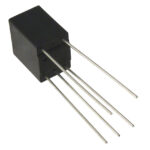 MET-60
The activity of extra discounts on wholesale prices is in full swing…
Please fill in your contact information and we will send you the latest wholesale price list.






