ChipApex | Global Electronic Components Supplier

SEARCH
Search Product
Search Post
— IC芯片 | 连接器 | 传感器 | 被动器件 —
Search productSearch post
— IC芯片 | 连接器 | 传感器 | 被动器件 —
Consult the customer manager about the wholesale price.
consultation hotline:86-132-6715-2157
email:[email protected]
Contact the product manager for consultation. One-stop consultation is available.
Do you want a lower wholesale price? Please send us your inquiry and we will reply immediately.
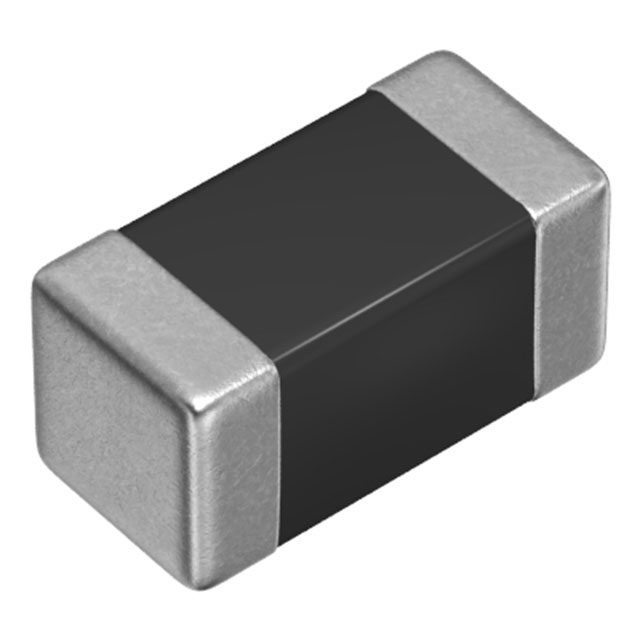
The MHF1608BAC182ATD25 is a single-channel common mode filter manufactured by TDK Corporation, designed for surface mount technology. It features an impedance of 3.5 kOhms with a 25% tolerance and operates within a frequency range up to 380 MHz. The component supports a maximum DC current of 170 mA and has a maximum DC resistance of 1.8 Ohms. It is housed in a compact 1.6 mm x 0.8 mm package and is qualified under the AEC-Q200 standard for automotive applications. The operating temperature range extends from -55°C to +125°C.
Verify the specific suffix TD25 against official TDK documentation to confirm tape and reel specifications. Ensure the selected variant matches the required impedance and current ratings for your circuit design. Cross-reference the AEC-Q200 qualification status if automotive compliance is mandatory for your application. Confirm package dimensions align with your PCB footprint requirements before finalizing procurement.
Select this component when high impedance common mode rejection is required in space-constrained automotive environments. The 1.6x0.8 mm package suits applications where board real estate is limited. Consider the 170 mA current rating to ensure it meets the operational load without saturation. Verify that the 3.5 kOhm impedance at the target frequency effectively attenuates the specific noise spectrum present in your system.
This part belongs to the TDK MHF series of common mode filters, which are engineered for electromagnetic compatibility (EMC) suppression. The series is characterized by its ability to handle high-frequency noise while maintaining a small physical profile. These components are widely used in automotive electronics to protect sensitive signal lines from interference, ensuring reliable operation in electrically noisy environments.
Check for direct substitutes within the TDK MHF family that share the same 1608 metric footprint and AEC-Q200 qualification. Ensure any replacement maintains the 3.5 kOhm impedance and 170 mA current handling capabilities. Verify that the alternative part offers equivalent thermal performance within the -55°C to +125°C range.
 MHF1608BAC182ATD25

The activity of extra discounts on wholesale prices is in full swing…
Please fill in your contact information and we will send you the latest wholesale price list.