 ChipApex | Global Electronic Components Supplier
SEARCH
Search Product
Search Post
— IC芯片 | 连接器 | 传感器 | 被动器件 —
Search productSearch post
— IC芯片 | 连接器 | 传感器 | 被动器件 —
Consult the customer manager about the wholesale price.
consultation hotline:86-132-6715-2157
email:[email protected]
Contact the product manager for consultation. One-stop consultation is available.
Do you want a lower wholesale price? Please send us your inquiry and we will reply immediately.
The MIC2225-GFYMT-TR is a dual-output voltage regulator featuring a high-efficiency 2MHz PWM synchronous buck converter and a 300mA LDO. It operates from a 2.7V to 5.5V input supply, delivering up to 600mA output current in PWM mode with greater than 95% efficiency. The device includes fully integrated MOSFET switches, micropower shutdown (1mA), thermal shutdown, and current limit protection. It is housed in a 10-pin 2mm x 2mm Thin MLF package and supports an operating junction temperature range of –40°C to +125°C.
Verify the specific suffix 'GFYMT' against official Microchip documentation to confirm pinout and electrical characteristics, as variations exist within the MIC2225 family. Confirm RoHS compliance status and lead times directly with authorized distributors or the manufacturer, as availability fluctuates. Ensure the ordering part number matches the required output voltage configuration and package type before finalizing procurement.
Select this component when space-constrained portable designs require both a high-current switching regulator and a low-noise linear regulator. The 2MHz switching frequency allows for smaller passive components compared to lower-frequency alternatives. Verify that the required load current does not exceed 600mA for the DC/DC section and 300mA for the LDO section. Ensure input voltage remains within the 2.7V to 5.5V range for proper operation.
This part belongs to the MIC2225 series of ultra-small dual-channel regulators designed by Microchip Technology (formerly Micrel). The series targets portable electronics requiring efficient power conversion in minimal footprint packages. The Thin MLF package variant offers a compact solution for modern mobile and handheld devices where board real estate is limited.
Check for MIC2225 variants with different suffixes (e.g., GMYMT) if pin compatibility or specific output configurations differ. Verify functional equivalence with other dual-output regulators from Microchip or competitors if supply constraints exist.
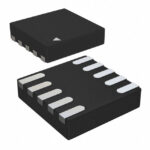 MIC2225-GFYMT-TR
The activity of extra discounts on wholesale prices is in full swing…
Please fill in your contact information and we will send you the latest wholesale price list.





