ChipApex | Global Electronic Components Supplier
SEARCH
Search Product
Search Post
— IC芯片 | 连接器 | 传感器 | 被动器件 —
Search productSearch post
— IC芯片 | 连接器 | 传感器 | 被动器件 —
Consult the customer manager about the wholesale price.
consultation hotline:86-132-6715-2157
email:[email protected]
Contact the product manager for consultation. One-stop consultation is available.
Do you want a lower wholesale price? Please send us your inquiry and we will reply immediately.
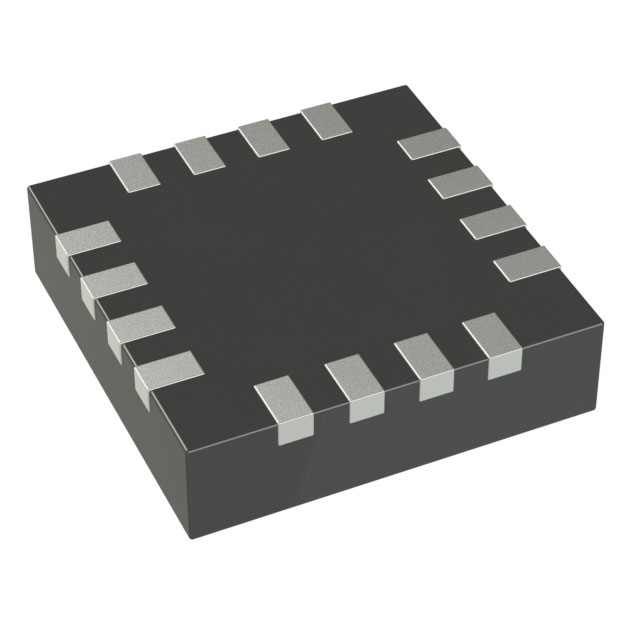
The MIC2800-G4SYML-TR is a digital power management IC from Microchip Technology, housed in a 16-pin QFN package. It integrates one buck converter and two linear regulators within a single component. The device operates with an input voltage range of 2.7 V to 5.5 V. Output voltages are adjustable from 1.2 V to 3.3 V. The switching frequency is fixed at 2 MHz. Maximum output currents include 300 mA for the linear regulators and up to 600 mA for the buck converter. It supports operation between -40°C and +125°C.
Verify the specific suffix G4MYML versus G4SYML when ordering, as these denote different output voltage configurations within the same family. Confirm RoHS compliance status and moisture sensitivity level requirements before integration into assembly processes. Ensure the reel packaging quantity matches production line needs. Cross-reference the datasheet revision history for any recent design or specification changes that may impact compatibility.
Select this component when a compact solution combining switching and linear regulation is required. The 2 MHz switching frequency allows for smaller external inductors compared to lower-frequency alternatives. Verify that the maximum output voltage requirement does not exceed 3.3 V for the SYML variant. Consider thermal performance in the 16-QFN package if high load currents are sustained. Ensure input voltage stays within the 2.7 V to 5.5 V operational window.
This part belongs to the MIC2800 series of digital power management ICs. It shares architectural similarities with other variants like MIC2800-G4MYML-TR but differs in output voltage ranges. The series is characterized by its integrated digital control loop and mixed-signal topology. It serves as a replacement for discrete regulator solutions in space-constrained designs.
MIC2800-G4MYML-TR offers similar functionality but with a different maximum output voltage range. MIC2800-G1JJYML-TR provides alternative output settings. Verify pin-to-pin compatibility and electrical specifications before substitution. Check for any updates in the MIC2800 family documentation regarding lead-free processing or assembly site changes.
 MIC2800-G4SYML-TR
The activity of extra discounts on wholesale prices is in full swing…
Please fill in your contact information and we will send you the latest wholesale price list.