 ChipApex | Global Electronic Components Supplier
SEARCH
Search Product
Search Post
— IC芯片 | 连接器 | 传感器 | 被动器件 —
Search productSearch post
— IC芯片 | 连接器 | 传感器 | 被动器件 —
Consult the customer manager about the wholesale price.
consultation hotline:86-132-6715-2157
email:[email protected]
Contact the product manager for consultation. One-stop consultation is available.
Do you want a lower wholesale price? Please send us your inquiry and we will reply immediately.
The MIC2810-4MSYML is a high-performance power management IC from Microchip Technology, integrating a 2 MHz DC/DC buck converter and two 300 mA low-dropout (LDO) regulators. It operates within an input voltage range of 2.7 V to 5.5 V and supports junction temperatures from -40°C to +125°C. The device features independent enable control for each output and includes a LowQ® mode for enhanced efficiency. Packaged in a 16-pin VQFN (3x3 mm), it provides triple output voltage regulation with built-in protection features such as Power-On Reset (POR).
Verify the manufacturer designation carefully, as the model originates from Micrel Inc., which was acquired by Microchip Technology. Ensure the datasheet references align with Microchip's current documentation standards. Confirm the package type is the 16-pin VQFN and check for specific suffix variations if available. Cross-reference ordering information with authorized distributors to ensure authenticity and compliance with RoHS standards.
Select this component when space-constrained designs require integrated DC/DC and LDO regulation. The 2 MHz switching frequency allows for smaller passive components compared to lower-frequency alternatives. Consider the LowQ® mode if battery life or thermal management is critical. Verify that the input voltage range of 2.7 V to 5.5 V matches the system supply requirements.
This part belongs to the MIC2810 family of digital power management ICs. It is designed for applications demanding high integration and efficiency. The device combines switching and linear regulation technologies to provide stable power supplies for complex electronic systems. Its small footprint makes it suitable for modern portable and industrial devices.
Check for direct substitutes within the MIC2810 series, such as variants with different pin counts or output configurations. Verify compatibility with existing PCB layouts due to the specific VQFN package dimensions. Ensure electrical parameters like current ratings and switching frequencies match the original design requirements.
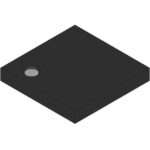 MIC2810-4MSYML
The activity of extra discounts on wholesale prices is in full swing…
Please fill in your contact information and we will send you the latest wholesale price list.





