 ChipApex | Global Electronic Components Supplier
SEARCH
Search Product
Search Post
— IC芯片 | 连接器 | 传感器 | 被动器件 —
Search productSearch post
— IC芯片 | 连接器 | 传感器 | 被动器件 —
Consult the customer manager about the wholesale price.
consultation hotline:86-132-6715-2157
email:[email protected]
Contact the product manager for consultation. One-stop consultation is available.
Do you want a lower wholesale price? Please send us your inquiry and we will reply immediately.
The MK1575-01GLFTR is a video clock and data recovery (CDR) integrated circuit manufactured by Renesas Electronics Corporation. Designed for application-specific clock and timing functions, this device operates with a single circuit and supports a maximum frequency of 80MHz. It accepts a clock input and provides LVCMOS output signals with a 1:2 input-to-output ratio. The component requires a supply voltage between 3.15V and 3.45V and features an internal PLL. It is housed in a 16-TSSOP surface-mount package with a width of 4.40mm and is rated for operation within a temperature range of 0°C to 70°C.
This component is officially listed as End-of-Life (EOL) by the manufacturer, with a Product Change Notification dated December 16, 2015. Verification of current availability should be conducted through authorized distributors or secondary market suppliers, as standard production channels may no longer stock this part. Buyers must confirm the specific revision and packaging status prior to acquisition.
Select the MK1575-01GLFTR when a dedicated CDR solution is required for video applications operating up to 80MHz. Ensure the design accommodates the 3.15V–3.45V supply range and the 16-TSSOP footprint. Since the device outputs LVCMOS signals, verify that downstream logic levels are compatible. Consider alternative components if long-term supply stability is critical due to its EOL status.
The MK1575-01GLFTR belongs to the MK1575-01 series of video clock and data recovery ICs from Renesas Electronics. This series is specialized for handling video timing signals, providing necessary clock regeneration and data recovery capabilities within a compact surface-mount package suitable for dense PCB layouts.
Due to the End-of-Life status, direct replacements should be evaluated based on pin compatibility and functional equivalence. Potential substitutes must support 80MHz CDR operations, LVCMOS outputs, and the 16-TSSOP package. Verify electrical specifications against the original datasheet to ensure seamless integration into existing video timing architectures.
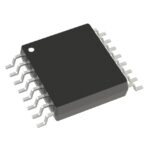 MK1575-01GLFTR
The activity of extra discounts on wholesale prices is in full swing…
Please fill in your contact information and we will send you the latest wholesale price list.





