 ChipApex | Global Electronic Components Supplier
SEARCH
Search Product
Search Post
— IC芯片 | 连接器 | 传感器 | 被动器件 —
Search productSearch post
— IC芯片 | 连接器 | 传感器 | 被动器件 —
Consult the customer manager about the wholesale price.
consultation hotline:86-132-6715-2157
email:[email protected]
Contact the product manager for consultation. One-stop consultation is available.
Do you want a lower wholesale price? Please send us your inquiry and we will reply immediately.
The MLPF-WB55-01E3 is a low-pass RF filter designed for 2.4 GHz ISM band applications, specifically serving as a matched filter companion chip for STM32WB series microcontrollers. It integrates an impedance matching network and harmonics filter within a compact 6-SMD, no-lead package measuring 1.60mm x 1.00mm x 0.43mm. The component operates with a center frequency of 2.45GHz and a bandwidth of 100MHz, exhibiting an insertion loss of 1.1dB. It supports surface-mount installation and functions reliably across a temperature range of -40°C to 105°C.
Verify the complete part number including the suffix E3 to ensure RoHS3 compliance and lead-free status. Confirm that the selected packaging option matches the required production volume, whether cut tape or reel. Ensure design files correspond to the specific MLPF-WB55-01E3 variant rather than generic family members. Cross-reference the datasheet DM00555530 for accurate pinout and thermal specifications before finalizing procurement orders.
Select this component when designing around STM32WB55 or STM32WB35 series devices requiring optimized RF performance. It is suitable for space-constrained IoT applications needing integrated matching and filtering. Consider the 6-pin SMD package dimensions against available PCB real estate. Evaluate the 1.1dB insertion loss against system link budget requirements. Ensure the operating temperature range meets the environmental conditions of the target application.
This component belongs to the MLPF-WB55 series of passive filters developed by STMicroelectronics. It is specifically engineered to complement the STM32WB line of ultra-low-power wireless microcontrollers. The series addresses the need for simplified RF front-end designs by integrating matching networks directly into the filter structure, reducing the component count typically required for 2.4 GHz wireless interfaces.
Publicly confirmed substitutes include MLPF-WB55-02E3 and MLPF-WB-01E3. Verify functional equivalence regarding impedance matching targets and harmonic suppression capabilities before substitution. Ensure package dimensions and pin configurations remain compatible with existing PCB layouts.
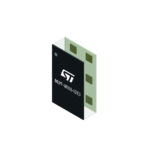 MLPF-WB55-01E3
The activity of extra discounts on wholesale prices is in full swing…
Please fill in your contact information and we will send you the latest wholesale price list.





