ChipApex | Global Electronic Components Supplier

SEARCH
Search Product
Search Post
— IC芯片 | 连接器 | 传感器 | 被动器件 —
Search productSearch post
— IC芯片 | 连接器 | 传感器 | 被动器件 —
Consult the customer manager about the wholesale price.
consultation hotline:86-132-6715-2157
email:[email protected]
Contact the product manager for consultation. One-stop consultation is available.
Do you want a lower wholesale price? Please send us your inquiry and we will reply immediately.
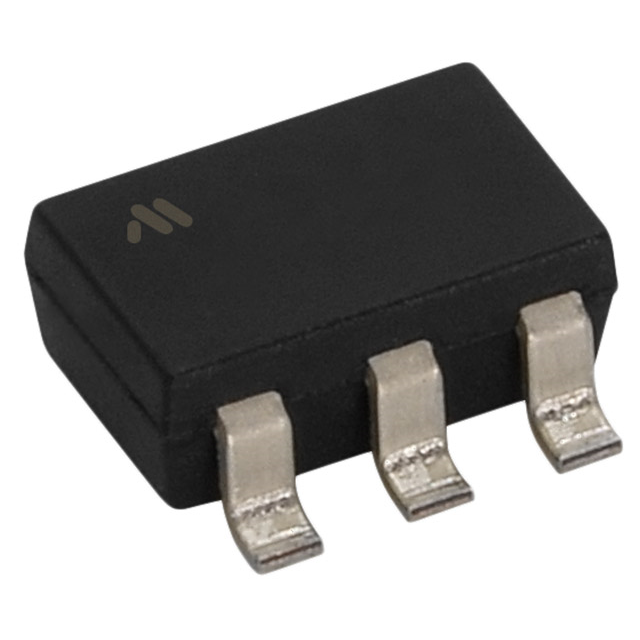
The MM3220Z01NRH is a fixed positive single output LDO regulator manufactured by Mitsumi Electric Company Ltd. It belongs to the power supply and power management category, specifically within power circuits. The device is classified as a battery protection IC for lithium-ion or polymer batteries, designed for two-cell configurations. It utilizes an SOT-26A package (SOT-23-6 pinout) and supports surface mount installation. The component operates within a temperature range of -40°C to 85°C and includes fault protections for overcurrent, overvoltage, and short circuits.
Verify the specific datasheet version for the MM3220Z01NRH to confirm exact electrical parameters and pin assignments. Ensure compatibility with the target PCB footprint for the SOT-26A package. Confirm that the application environment remains within the specified operating temperature range of -40°C to 85°C. Cross-reference the part number with official Mitsumi documentation to distinguish between similar variants in the MM3220 series.
Select this component when designing protection circuits for two-cell lithium-based battery systems requiring integrated fault detection. The SOT-26A package offers a compact solution for space-constrained applications. Consider the specific voltage thresholds and current limits defined in the official datasheet to ensure adequate protection margins for the connected battery cells and load requirements.
The MM3220Z01NRH is part of the MM3220 series from Mitsumi Electric Company Ltd, which focuses on battery management and power protection solutions. This series targets mobile and portable devices where reliable battery safety is critical. The Z01 suffix typically denotes specific protection thresholds or feature sets within the broader MM3220 family, distinguishing it from other variants like the AA1 or H10 models.
Official substitutes include other MM3220 series variants such as MM3220AA1NRH or MM3220U01NRH, provided they match the required cell count and protection specifications. Verify pin-to-pin compatibility and electrical parameter alignment before substitution.
 MM3220Z01NRH

The activity of extra discounts on wholesale prices is in full swing…
Please fill in your contact information and we will send you the latest wholesale price list.