ChipApex | Global Electronic Components Supplier

SEARCH
Search Product
Search Post
— IC芯片 | 连接器 | 传感器 | 被动器件 —
Search productSearch post
— IC芯片 | 连接器 | 传感器 | 被动器件 —
Consult the customer manager about the wholesale price.
consultation hotline:86-132-6715-2157
email:[email protected]
Contact the product manager for consultation. One-stop consultation is available.
Do you want a lower wholesale price? Please send us your inquiry and we will reply immediately.
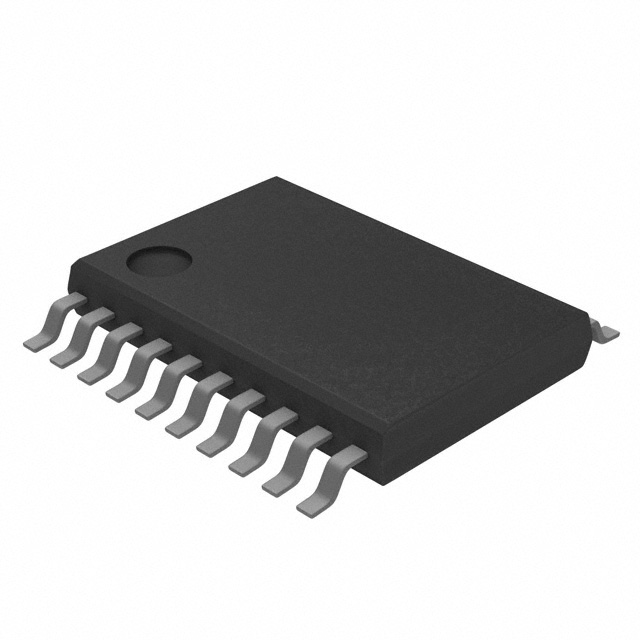
The MM3474F04VBE is a monolithic integrated circuit designed for battery protection in lithium-ion and lithium-polymer rechargeable secondary batteries. It provides comprehensive protection against overcharge, overdischarge, and discharge overcurrent conditions. The device detects short circuits and manages cell voltage levels within a 3 to 5-cell configuration. It is housed in a TSSOP20 package with a shrink pitch of 0.635 mm. The component operates within an industrial temperature range from -40 °C to 85 °C. Maximum supply current is specified at 0.02 mA.
Verify the specific suffix F04 against official Mitsumi documentation to confirm pinout and electrical characteristics match the target design requirements. Ensure the TSSOP20 package dimensions align with PCB layout constraints. Confirm that the industrial temperature rating meets the operational environment specifications. Cross-reference the part number with authorized distributors to ensure authenticity and traceability of the semiconductor components.
Select this component when designing protection schemes for multi-cell lithium-based battery architectures. The IC integrates multiple protection functions into a single package, reducing board space compared to discrete solutions. Consider the maximum supply current and operating temperature range during thermal analysis. Ensure the external sensing resistors are selected to match the overcurrent thresholds defined in the datasheet for accurate fault detection.
The MM3474 series belongs to Mitsumi's portfolio of power supply support circuits focused on battery safety. This specific model addresses the needs of multi-cell configurations, distinguishing it from single-cell protection ICs like the MM3645. The series supports various cell counts, offering scalable protection solutions for different energy storage applications within portable electronics and industrial equipment.
Public confirmed substitute part numbers are not available in the provided documentation. Verify compatibility with existing designs by comparing pin assignments and protection thresholds with alternative multi-cell battery protection ICs from other manufacturers if sourcing becomes constrained.
 MM3474F04VBE

The activity of extra discounts on wholesale prices is in full swing…
Please fill in your contact information and we will send you the latest wholesale price list.