ChipApex | Global Electronic Components Supplier

SEARCH
Search Product
Search Post
— IC芯片 | 连接器 | 传感器 | 被动器件 —
Search productSearch post
— IC芯片 | 连接器 | 传感器 | 被动器件 —
Consult the customer manager about the wholesale price.
consultation hotline:86-132-6715-2157
email:[email protected]
Contact the product manager for consultation. One-stop consultation is available.
Do you want a lower wholesale price? Please send us your inquiry and we will reply immediately.
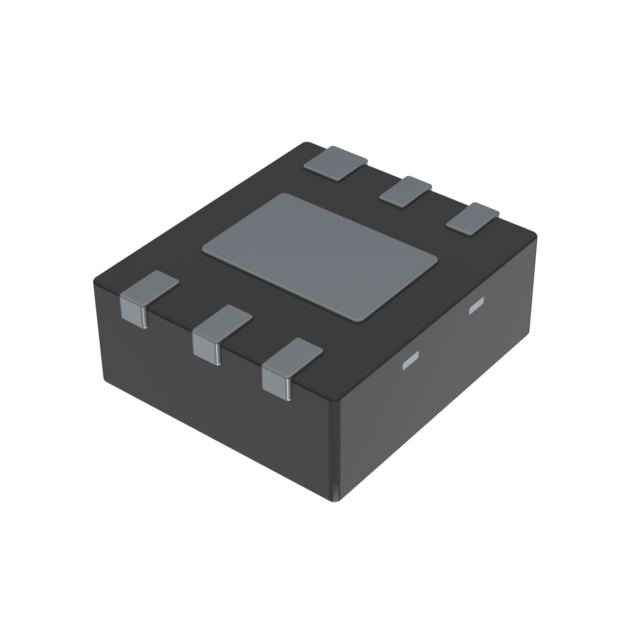
The MM3508A06RRE is a secondary protection integrated circuit designed for lithium-ion and lithium-polymer battery packs containing two to four series-connected cells. Manufactured by Mitsumi Electric, this component provides essential safety mechanisms against over-voltage, under-voltage, and short-circuit conditions. It operates within a supply voltage range of 2.5V to 5.5V, ensuring compatibility with standard multi-cell battery configurations. The device utilizes an FDFN-6-EP package, facilitating surface-mount assembly in compact electronic devices requiring reliable battery management.
Verify the specific ordering suffix and package variant when sourcing to ensure exact mechanical and electrical compatibility. Confirm that the supplier provides official documentation supporting the active status and RoHS compliance of the MM3508A06RRE. Cross-reference the manufacturer's latest datasheet to validate pinout definitions and absolute maximum ratings prior to integration into design projects.
Select this component for applications requiring dedicated secondary protection for small-scale lithium battery arrays. Ensure the system voltage remains within the 2.5V to 5.5V operational range. Consider the FDFN-6-EP package constraints for thermal management and PCB layout. This IC is suitable where space efficiency and precise fault detection are prioritized over complex cell balancing features found in more advanced PMICs.
The MM3508A06RRE belongs to the MM3508 series of battery protection ICs from Mitsumi Electric. This series focuses on safeguarding lithium-ion and lithium-polymer batteries in consumer electronics. The component complements primary protection circuits by adding robust secondary layers against critical electrical faults, enhancing overall system reliability and safety standards for portable power sources.
The MM3508B06RRE and MM3508B07RRE are related components within the same product family offering similar secondary protection functionalities for 2 to 4-cell configurations. Verify pin-to-pin compatibility and identical voltage operating ranges before substituting. Consult official datasheets to confirm any differences in package types or specific fault response characteristics.
 MM3508A06RRE

The activity of extra discounts on wholesale prices is in full swing…
Please fill in your contact information and we will send you the latest wholesale price list.