 ChipApex | Global Electronic Components Supplier
SEARCH
Search Product
Search Post
— IC芯片 | 连接器 | 传感器 | 被动器件 —
Search productSearch post
— IC芯片 | 连接器 | 传感器 | 被动器件 —
Consult the customer manager about the wholesale price.
consultation hotline:86-132-6715-2157
email:[email protected]
Contact the product manager for consultation. One-stop consultation is available.
Do you want a lower wholesale price? Please send us your inquiry and we will reply immediately.
The MM74HC123AM is a dual retriggerable monostable multivibrator utilizing advanced silicon-gate CMOS technology. It features two independent circuits with negative (A) and positive (B) transition triggered inputs, plus a clear input for resetting the output pulse. The device operates within a supply voltage range of 2V to 6V and supports an operating temperature range from -40°C to +85°C. Typical propagation delay is 25 ns, with maximum trigger propagation delays reaching 250 ns at 2.0V. Quiescent supply current is typically 8 µA, rising to 160 µA under standby conditions at 6.0V. Output pulse width is determined by external timing components using the formula PW = REXT × CEXT.
Verify component authenticity through authorized distribution channels. Confirm package marking matches M16A designation for 16-Lead SOIC. Check datasheet revisions as Fairchild Semiconductor documentation may reflect legacy manufacturing data prior to acquisition. Ensure external timing components meet specified tolerance requirements for accurate pulse width calculation.
Select this component when dual independent monostable functions are required in a single package. Verify that the 2V to 6V supply range aligns with system power rails. Consider the 25 ns typical propagation delay for high-speed applications. Ensure external resistor and capacitor values support the desired pulse width without exceeding minimum resistance limits defined in the electrical characteristics.
This device belongs to the 74HC series of high-speed CMOS logic integrated circuits. It provides functionality equivalent to low-power Schottky TTL but retains standard CMOS advantages such as low power consumption and high noise immunity. The MM74HC123A is functionally compatible with other 74HC monostable multivibrators, though pin configurations and specific electrical parameters should be verified against individual datasheets before substitution.
Direct substitutes include devices from the same 74HC family with identical pinouts and logical functions. Verify that replacement parts maintain the retriggerable feature and Schmitt trigger inputs if these are critical to the design. Check operating voltage and temperature ranges to ensure compatibility with existing system constraints.
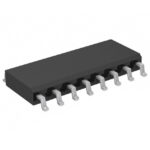 MM74HC123AM
The activity of extra discounts on wholesale prices is in full swing…
Please fill in your contact information and we will send you the latest wholesale price list.






