 ChipApex | Global Electronic Components Supplier
SEARCH
Search Product
Search Post
— IC芯片 | 连接器 | 传感器 | 被动器件 —
Search productSearch post
— IC芯片 | 连接器 | 传感器 | 被动器件 —
Consult the customer manager about the wholesale price.
consultation hotline:86-132-6715-2157
email:[email protected]
Contact the product manager for consultation. One-stop consultation is available.
Do you want a lower wholesale price? Please send us your inquiry and we will reply immediately.
The MM74HC123AN is a dual retriggerable monostable multivibrator manufactured by onsemi. It utilizes advanced silicon-gate CMOS technology to provide speeds comparable to low-power Schottky TTL while maintaining low power consumption and high noise immunity. The device features two independent circuits, each with negative (A) and positive (B) transition triggered inputs, as well as a clear input for resetting the output. It supports a wide power supply range of 2V to 6V and includes Schmitt trigger inputs to accommodate slow rise and fall times.
Verify the manufacturer origin, as this component was originally produced by Fairchild Semiconductor before acquisition by onsemi. Confirm the package type matches the required PCB footprint, specifically the 16-Lead Plastic Dual-In-Line Package (PDIP). Ensure the ordering code corresponds to the standard version without tape and reel suffixes if discrete components are needed.
Select this component when a dual-channel monostable multivibrator with Schmitt trigger inputs is required. It is suitable for applications needing compatibility with LS-TTL loads due to its fanout capability. Consider the propagation delay specifications relative to the system clock speed. Verify that the external RC timing components can support the desired pulse width range within the operating voltage constraints.
This part belongs to the 74HC series of high-speed CMOS logic devices. It is functionally compatible with the standard 74LS logic family regarding pinouts and basic operations. The 'N' suffix indicates the 16-lead PDIP package format. It serves as a fundamental building block for timing and waveform generation tasks in mixed-signal environments.
Direct substitutes include other 74HC123 variants from different manufacturers such as Texas Instruments or Nexperia, provided they match the PDIP-16 package and electrical characteristics. Ensure any replacement maintains the retriggerable functionality and Schmitt trigger input requirements specified in the design.
If a valid trigger occurs while the output is already HIGH, the output pulse width is extended from the moment of the new trigger until the full timing cycle completes based on the last trigger event.
The Clear input resets the one-shot circuit. When taken LOW, it forces the Q output to its quiescent LOW state and rapidly charges the external timing capacitor, effectively terminating the current pulse early.
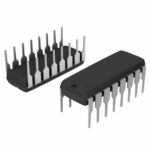 MM74HC123AN
The activity of extra discounts on wholesale prices is in full swing…
Please fill in your contact information and we will send you the latest wholesale price list.






