 ChipApex | Global Electronic Components Supplier
SEARCH
Search Product
Search Post
— IC芯片 | 连接器 | 传感器 | 被动器件 —
Search productSearch post
— IC芯片 | 连接器 | 传感器 | 被动器件 —
Consult the customer manager about the wholesale price.
consultation hotline:86-132-6715-2157
email:[email protected]
Contact the product manager for consultation. One-stop consultation is available.
Do you want a lower wholesale price? Please send us your inquiry and we will reply immediately.
The MMBZ5258BTW_R1_00001 is a surface mount silicon zener diode from the Panjit MMBZ5221BTW to MMBZ5267BTW series. It features a nominal zener voltage of 36V with a tolerance range of 34.20V to 37.80V. The device operates within a power dissipation rating of 200mW at 25°C and supports an operating junction temperature range of -55°C to +150°C. Electrical characteristics include a maximum zener impedance (ZZT) of 70Ω at IZT=3.4mA, a maximum reverse leakage current of 0.1μA at VR=27V, and a peak forward surge current capability of 2A. The component utilizes a SOT-363 plastic package.
Verify the specific ordering suffix R1_00001 against official Panjit documentation to confirm reel packaging details and marking codes. Ensure that the SOT-363 footprint matches the design layout requirements. Confirm compliance with environmental directives relevant to the target market before finalizing procurement orders.
Select this component when a precise 36V reference or clamp is required in space-constrained designs. The SOT-363 package allows for compact board layouts compared to larger through-hole alternatives. Consider the 200mW thermal limit and derating curves for high-temperature environments to ensure stable operation under load conditions.
This part belongs to the MMBZ52xxBTW series, which offers a wide range of zener voltages from 2.4V to 75V in the same SOT-363 package. The series is designed for general-purpose voltage regulation and protection applications in consumer electronics and industrial equipment where small form factors are critical.
Direct replacements within the same series include other MMBZ52xxBTW variants if voltage requirements differ. Cross-referencing with other manufacturers' SOT-363 zener diodes requires verifying pinout compatibility and ensuring electrical parameters such as impedance and leakage current meet or exceed the original specifications.
The marking code for the MMBZ5258BTW is M3.
The test current (IZT) for measuring the nominal zener voltage is 3.4mA.
Yes, the datasheet states that the planar die construction is ideally suited for automated assembly processes.
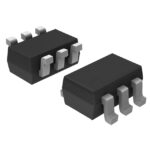 MMBZ5258BTW_R1_00001
The activity of extra discounts on wholesale prices is in full swing…
Please fill in your contact information and we will send you the latest wholesale price list.




