 ChipApex | Global Electronic Components Supplier

SEARCH
Search Product
Search Post
— IC芯片 | 连接器 | 传感器 | 被动器件 —
Search productSearch post
— IC芯片 | 连接器 | 传感器 | 被动器件 —
Consult the customer manager about the wholesale price.
consultation hotline:86-132-6715-2157
email:[email protected]
Contact the product manager for consultation. One-stop consultation is available.
Do you want a lower wholesale price? Please send us your inquiry and we will reply immediately.
The MMTV4041 is a precision diode shunt regulator and voltage reference manufactured by Diotec Semiconductor. It provides a stable reference voltage (VREF) ranging from 1.200 V to 1.250 V with a typical value of 1.240 V at a cathode current (IK) of 100 µA. The device operates within a recommended cathode current range of 0.1 mA to 20 mA and features a low dynamic output impedance (ZKA) of approximately 0.25 Ω. It is housed in an SOT-23 package, supports a maximum junction temperature of 125°C for commercial grade applications, and includes temperature compensation.
Verify the specific suffix when ordering: standard versions are commercial grade, while suffix -Q indicates AEC-Q101 compliance and suffix -AQ denotes qualification status. Confirm that the application environment remains within the specified ambient temperature limits (-40°C to +85°C or +125°C depending on drift requirements). Ensure PCB layout utilizes adequate copper pad areas (3 mm² per terminal) to maintain thermal resistance specifications and prevent overheating during operation.
Select this component when a sub-1.5 V precision reference is required in a compact surface-mount form factor. The MMTV4041 is suitable for circuits needing tight voltage tolerance and low output impedance. Consider the thermal resistance and power dissipation limits if operating near the upper bounds of the recommended current range. Verify that the supply voltage allows for sufficient headroom above the reference voltage to maintain regulation.
This part belongs to Diotec's series of precision diode shunt regulators designed as direct replacements for traditional low-voltage Zener diodes. Unlike standard Zeners, it offers significantly lower dynamic impedance and tighter tolerance bands. The device is optimized for commercial and industrial environments where space constraints favor the SOT-23 package over larger axial leads.
It serves as a drop-in replacement for low voltage Zener diodes requiring similar reference levels. When substituting, ensure the new circuit can accommodate the specific minimum regulation current (typically 40 µA to 100 µA) to maintain stability. Verify that the load does not draw current exceeding the device's maximum cathode current rating of 20 mA.
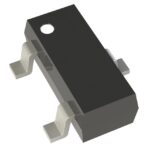 MMTV4041

The activity of extra discounts on wholesale prices is in full swing…
Please fill in your contact information and we will send you the latest wholesale price list.





