ChipApex | Global Electronic Components Supplier
SEARCH
Search Product
Search Post
— IC芯片 | 连接器 | 传感器 | 被动器件 —
Search productSearch post
— IC芯片 | 连接器 | 传感器 | 被动器件 —
Consult the customer manager about the wholesale price.
consultation hotline:86-132-6715-2157
email:[email protected]
Contact the product manager for consultation. One-stop consultation is available.
Do you want a lower wholesale price? Please send us your inquiry and we will reply immediately.
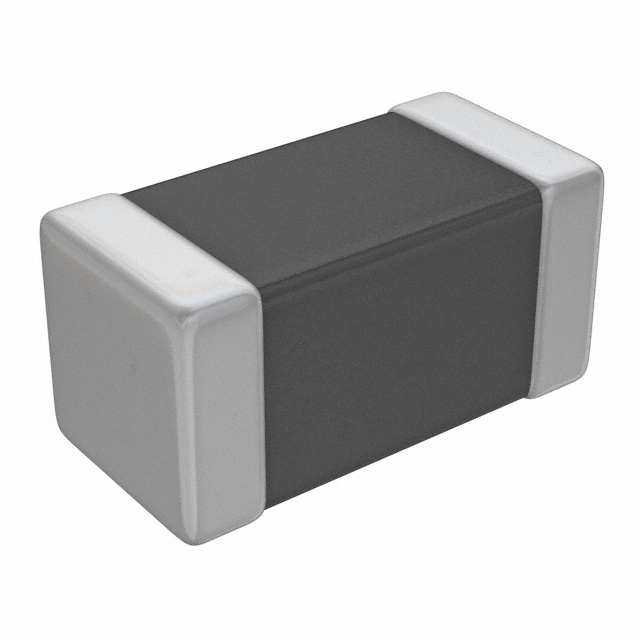
The MMZ1608Y152BTA00 is a surface-mount ferrite bead manufactured by TDK Corporation, designed for noise suppression in electronic circuits. It features a 1608 metric package size (0603 imperial) and offers a DC resistance of 2.5 ohms maximum at room temperature. The component provides an impedance of 1500 ohms at 100 MHz, ensuring effective attenuation of high-frequency electromagnetic interference. Rated for a continuous current of 200 mA, it operates reliably within a temperature range from -55°C to +85°C, making it suitable for compact consumer electronics and portable devices requiring stable signal integrity.
Verify the complete part number including suffixes against official TDK documentation to ensure correct impedance and tolerance specifications. Confirm package dimensions and termination compatibility with your manufacturing equipment. Check for RoHS compliance status if required by your regional regulations. Ensure storage conditions adhere to manufacturer guidelines to maintain solderability and performance integrity before assembly.
Select this component based on its specific impedance profile at target frequencies rather than general category assumptions. Evaluate the DC resistance impact on power efficiency within your circuit design constraints. Consider the rated current capability relative to peak operational loads to prevent saturation or overheating. Validate thermal performance under worst-case ambient conditions to ensure long-term reliability in the final application environment.
This ferrite bead belongs to TDK's MMZ series, which focuses on compact noise suppression solutions for digital and analog circuits. The series is widely utilized in consumer electronics due to its small footprint and reliable performance. The MMZ1608Y152BTA00 specifically addresses the need for space-constrained designs while maintaining effective electromagnetic interference control in sensitive signal paths.
Consult TDK's official cross-reference guides for verified substitutes. Ensure any alternative maintains identical impedance values at critical frequencies and compatible current ratings. Verify package dimensions match existing PCB footprints to avoid mechanical rework. Confirm that replacement components meet the same environmental and regulatory standards as the original specification.
 MMZ1608Y152BTA00
The activity of extra discounts on wholesale prices is in full swing…
Please fill in your contact information and we will send you the latest wholesale price list.