ChipApex | Global Electronic Components Supplier

SEARCH
Search Product
Search Post
— IC芯片 | 连接器 | 传感器 | 被动器件 —
Search productSearch post
— IC芯片 | 连接器 | 传感器 | 被动器件 —
Consult the customer manager about the wholesale price.
consultation hotline:86-132-6715-2157
email:[email protected]
Contact the product manager for consultation. One-stop consultation is available.
Do you want a lower wholesale price? Please send us your inquiry and we will reply immediately.
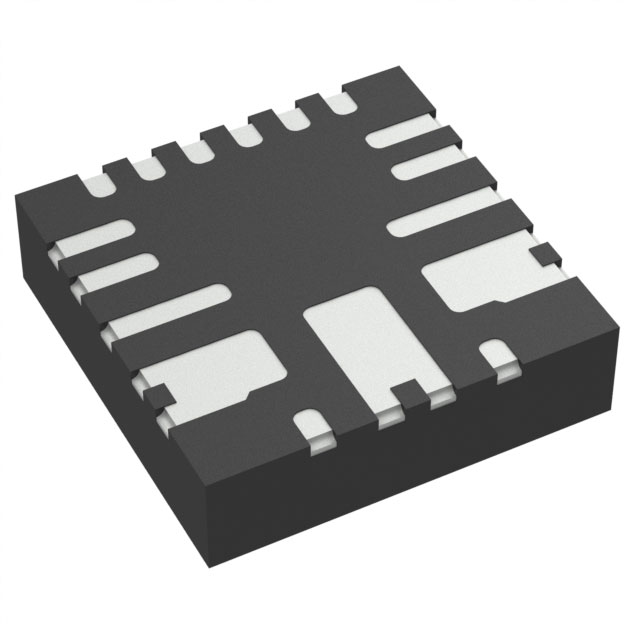
The MP3385BGR-Z is a step-up controller with four regulated LED current channels, designed for driving WLED arrays in LCD panel backlight applications. It features an input voltage range of 4.5V to 33V and supports up to 300mA per string with an 80V absolute maximum rating. The device utilizes a buck topology variant for boost control, operates at a programmable switching frequency between 100kHz and 900kHz, and includes an I2C interface for configuration. It is housed in a QFN-20 package.
Verify the specific suffix (Z) against the manufacturer's latest documentation to ensure compliance with current environmental standards and pinout configurations. Confirm that the QFN-20 package dimensions align with your PCB footprint requirements. Cross-reference the I2C address settings if integrating into existing systems to avoid communication conflicts. Ensure thermal management solutions are adequate for the expected power dissipation levels under full load conditions.
Select this component when designing systems requiring precise current matching across multiple LED strings without external resistors. It is suitable for applications needing flexible dimming control through digital interfaces. Consider the input voltage range and output voltage capabilities to ensure compatibility with the power supply and LED forward voltage requirements. Evaluate the thermal performance within the QFN-20 package for the intended operating environment.
The MP3385B series represents a family of integrated WLED controllers from Monolithic Power Systems. The MP3385BGR-Z is a specific variant within this lineup, offering four-channel regulation. While the base MP3385 model is noted as not recommended for new designs, the B-series variants continue production. This part belongs to the broader category of PMIC LED drivers focused on display backlighting solutions.
For new designs, consider the MP3385A series as an alternative. Verify electrical compatibility and pinout correspondence before substitution. Check for any differences in I2C command sets or protection thresholds between the B and A series variants to ensure seamless integration.
 MP3385BGR-Z

The activity of extra discounts on wholesale prices is in full swing…
Please fill in your contact information and we will send you the latest wholesale price list.