 ChipApex | Global Electronic Components Supplier
SEARCH
Search Product
Search Post
— IC芯片 | 连接器 | 传感器 | 被动器件 —
Search productSearch post
— IC芯片 | 连接器 | 传感器 | 被动器件 —
Consult the customer manager about the wholesale price.
consultation hotline:86-132-6715-2157
email:[email protected]
Contact the product manager for consultation. One-stop consultation is available.
Do you want a lower wholesale price? Please send us your inquiry and we will reply immediately.
The MPA4609IPFBT is a quad, differential I/O, 2x1 multiplexed high gain preamplifier manufactured by Texas Instruments. It features four differential output channels and two sets of four differential inputs controlled by TTL/CMOS channel select lines. The device operates on a single +5V supply with a quiescent current of 50mA. It provides a nominal open-load gain of 190V/V and a bandwidth of 90MHz up to 3.5Vpp output. Key electrical characteristics include a low input noise voltage of 0.65nV/√Hz, an input offset voltage of ±0.8mV maximum, and a differential slew rate of 150V/µs. The component is housed in a TQFP-48 package.
Verify the specific ordering suffix IPFBT corresponds to the Tape and Reel packaging quantity of 250 units as documented in the manufacturer's data sheet. Confirm that the temperature range specification aligns with the industrial grade requirements of the target application environment. Ensure compatibility with the required TQFP-48 footprint during PCB layout validation.
Select this component for designs requiring high gain and low noise in a compact multi-channel configuration. The fixed 190V/V gain simplifies circuit design but requires attention to input signal levels to avoid saturation. Consider the 50mA quiescent current for power budget calculations. The TTL/CMOS compatible control interface facilitates direct connection to standard digital logic sources without additional level shifting.
This part belongs to the MPA4609 family of high-gain preamplifiers designed for low-level signal amplification. It serves as a specialized solution for systems needing multiple differential channels with integrated multiplexing capabilities. The device complements other Texas Instruments precision amplifiers by offering a fixed-gain, high-bandwidth alternative to configurable op-amp solutions.
No public confirmed substitute part numbers are available in the provided documentation.
Channel selection is managed by two TTL/CMOS compatible pins (Pin 3 and Pin 34). A voltage below 0.9V selects the reverse channels, while a voltage above 1.6V selects the forward channels.
The nominal gain of 190V/V can be attenuated by adding an external load resistor between the differential output pins. For instance, a 940Ω resistor reduces the gain by half to 95V/V.
The channel switching time is typically 50ns, allowing for rapid transitions between the forward and reverse input sets.
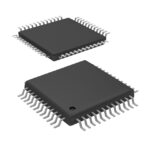 MPA4609IPFBT
The activity of extra discounts on wholesale prices is in full swing…
Please fill in your contact information and we will send you the latest wholesale price list.







