 ChipApex | Global Electronic Components Supplier
SEARCH
Search Product
Search Post
— IC芯片 | 连接器 | 传感器 | 被动器件 —
Search productSearch post
— IC芯片 | 连接器 | 传感器 | 被动器件 —
Consult the customer manager about the wholesale price.
consultation hotline:86-132-6715-2157
email:[email protected]
Contact the product manager for consultation. One-stop consultation is available.
Do you want a lower wholesale price? Please send us your inquiry and we will reply immediately.
The MPC17511AEP is a monolithic H-Bridge motor driver designed for portable electronic applications. It integrates control logic, a charge pump, gate drivers, and high-current low RDS(on) MOSFET output circuits to drive brushed DC motors in both directions. The device supports parallel MCU interfaces and features auxiliary gate drives for external MOSFETs. Key electrical parameters include a supply voltage range of 2.7V to 5.7V, a load voltage range of 2V to 6.8V, and an operating temperature range of -20°C to 150°C TJ. It utilizes a 24-QFN-EP (4x4) package.
Verify the specific suffix 'AEP' against official NXP documentation to confirm pinout and functional compatibility with standard MPC17511 variants. Confirm availability status as some related models may be obsolete. Ensure the selected evaluation board, such as FRDM-17511EP-EVB, matches the required interface and voltage specifications for your prototype development.
Select this component when designing battery-operated systems where low conduction loss and extended runtime are critical. The integrated charge pump simplifies design by eliminating external bootstrap components. Consider the 24-QFN-EP package for compact layouts requiring robust thermal dissipation through the exposed pad. Verify that the parallel interface requirements align with your microcontroller's GPIO capabilities.
The MPC17511 series belongs to NXP's portfolio of integrated motor drivers aimed at portable applications. It serves as a complete solution for H-Bridge control, combining logic and power stages in a single IC. This integration reduces board space and simplifies layout compared to discrete solutions. The family is optimized for low-voltage operation suitable for single-cell or dual-cell battery configurations.
The MPC17510 is a discontinued predecessor in the same family. While it shares similar functionality, verify differences in supply voltage ranges and current ratings before substitution. Ensure any replacement maintains compatibility with the 24-QFN-EP footprint if PCB reuse is intended.
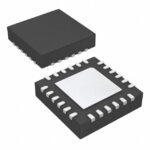 MPC17511AEP
The activity of extra discounts on wholesale prices is in full swing…
Please fill in your contact information and we will send you the latest wholesale price list.





