 ChipApex | Global Electronic Components Supplier

SEARCH
Search Product
Search Post
— IC芯片 | 连接器 | 传感器 | 被动器件 —
Search productSearch post
— IC芯片 | 连接器 | 传感器 | 被动器件 —
Consult the customer manager about the wholesale price.
consultation hotline:86-132-6715-2157
email:[email protected]
Contact the product manager for consultation. One-stop consultation is available.
Do you want a lower wholesale price? Please send us your inquiry and we will reply immediately.
The MPC18730EP is a Power Management IC (PMIC) designed for portable applications, regulating five independent output voltages from single-cell Li-Ion (2.7 V to 4.2 V), Ni-MH, or dry cell inputs (0.9 V to 2.2 V). It integrates two DC-DC converters and three low-dropout (LDO) linear regulators. Output voltages are programmable via a 3-wire serial interface. In Li-Ion systems, both DC-DC converters operate as buck regulators; in Ni-MH/dry cell systems, one acts as a boost and the other as a buck-boost regulator. DC-DC outputs range from 1.613 V to 3.2 V at up to 120 mA, and 0.805 V to 1.5 V at up to 100 mA.
Verify the EP suffix confirms Pb-free packaging designation. Ensure compatibility with the 64-WFQFN (9x9 mm) surface-mount package requirements. Confirm that the design supports the required 3-wire serial interface protocol for voltage programming and mode configuration. Check operating temperature range specifications (-10°C to 65°C) against environmental constraints.
Select this component when designing systems powered by single-cell batteries requiring multiple regulated rails. The choice depends on the need for integrated buck/boost/buck-boost capabilities alongside LDOs. Consider the serial interface complexity versus parallel resistor-setting alternatives. Evaluate the specific current demands of the load against the 120 mA and 100 mA DC-DC limits.
Manufactured by Freescale Semiconductor (now NXP Semiconductors), this PMIC targets the handheld and mobile device market. It consolidates multiple power regulation functions into a single chip, reducing board space and component count compared to discrete solutions. The EP variant specifically denotes lead-free compliance for environmental standards.
Publicly confirmed substitute part numbers are not available in the provided documentation. Verify pin-to-pin and functional compatibility with any alternative PMICs before implementation.
For single-cell Li-Ion inputs, both DC-DC converters are configured as buck (step-down) regulators. For single-cell Ni-MH or dry cell inputs, one converter operates as a boost (step-up) regulator and the other as a buck-boost regulator.
The output voltage for each of the five regulated outputs is set independently through a 3-wire serial interface.
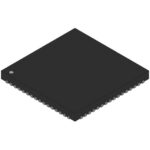 MPC18730EP

The activity of extra discounts on wholesale prices is in full swing…
Please fill in your contact information and we will send you the latest wholesale price list.





