 ChipApex | Global Electronic Components Supplier
SEARCH
Search Product
Search Post
— IC芯片 | 连接器 | 传感器 | 被动器件 —
Search productSearch post
— IC芯片 | 连接器 | 传感器 | 被动器件 —
Consult the customer manager about the wholesale price.
consultation hotline:86-132-6715-2157
email:[email protected]
Contact the product manager for consultation. One-stop consultation is available.
Do you want a lower wholesale price? Please send us your inquiry and we will reply immediately.
The MPC9109ACR2 is a clock distribution integrated circuit manufactured by Renesas Electronics Corporation, designed primarily for Intel CPU server applications. It operates with a single circuit and supports a frequency maximum of 250MHz. The device accepts LVCMOS or LVPECL inputs and provides LVCMOS outputs, featuring a 2:18 input-to-output ratio. It functions within a supply voltage range of 2.375V to 3.465V and an operating temperature range of 0°C to 70°C. The component is housed in a 32-LQFP package, specifically identified as a 32-TQFP (7x7) supplier device package, and utilizes surface mount technology.
The MPC9109ACR2 is listed as an obsolete product status. Verification of availability requires checking authorized distributors for remaining stock or end-of-life inventory. No new production is indicated in the provided documentation. Buyers should confirm the specific revision level and packaging type (Tape & Reel) with suppliers before procurement.
This component is suitable for designs requiring a 2:18 fan-out buffer for Intel CPU servers. It requires a power supply between 2.375V and 3.465V. Designers must ensure the input signal matches LVCMOS or LVPECL standards. The 32-LQFP package necessitates appropriate PCB footprint design. Since it lacks a PLL, external timing control may be required if jitter specifications are not met by the source clock.
The MPC9109ACR2 belongs to the MPC9109 series of clock drivers and distribution ICs. It is part of Renesas' portfolio for application-specific clock timing solutions. The 'CR2' suffix typically denotes the package variant and tape/reel packaging configuration, consistent with the 32-LQFP form factor described in distributor listings.
As the product status is obsolete, direct replacements must be sourced from authorized channels or secondary markets. Cross-referencing with other 2:18 LVCMOS/LVPECL input clock distributors from Renesas or other manufacturers is necessary. Ensure pin compatibility and electrical parameters match the original design requirements.
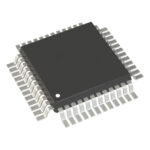 MPC9109ACR2
The activity of extra discounts on wholesale prices is in full swing…
Please fill in your contact information and we will send you the latest wholesale price list.





