ChipApex | Global Electronic Components Supplier

SEARCH
Search Product
Search Post
— IC芯片 | 连接器 | 传感器 | 被动器件 —
Search productSearch post
— IC芯片 | 连接器 | 传感器 | 被动器件 —
Consult the customer manager about the wholesale price.
consultation hotline:86-132-6715-2157
email:[email protected]
Contact the product manager for consultation. One-stop consultation is available.
Do you want a lower wholesale price? Please send us your inquiry and we will reply immediately.
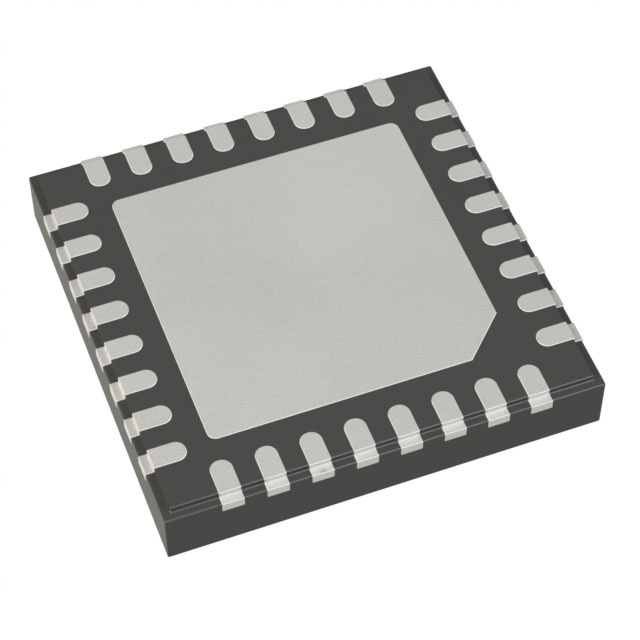
The MPF5200AMBA2ES is a multi-channel Power Management IC (PMIC) from the PF5200 series, designed for high-performance automotive applications. It features two step-down DC/DC converters and one Low Dropout (LDO) regulator. The device operates within an input voltage range of 2.7 V to 5.5 V and supports a maximum output current of 8 A. It is housed in a HWQFN-32 package with surface mount installation. The component meets ASIL-B safety levels and functions reliably across a temperature range of -40°C to +125°C.
Verify the specific suffix '2' indicates the configuration with two buck converters and one LDO. Confirm the HWQFN-32 package type matches your PCB footprint. Ensure the ASIL-B rating aligns with your system's safety integrity level requirements. Check moisture sensitivity labels if storage conditions are critical. Validate that the operating temperature range covers your environmental constraints.
Select this part when a compact PMIC solution is required for automotive environments needing ASIL-B compliance. It is suitable for designs requiring multiple regulated outputs from a single vehicle battery source. Consider the 8 A total output capability against your load demands. The HWQFN-32 package offers a small form factor for space-constrained boards. Verify compatibility with existing NXP PF5200 development tools if prototyping.
This component belongs to the PF5200 family of multi-channel PMICs from NXP Semiconductors. The family targets high-performance automotive applications with configurable power stages. Other variants in the series may offer different numbers of regulators or safety levels, such as ASIL-D options. The MPF5200AMBA2ES specifically provides a balanced mix of switching and linear regulation.
Direct substitutes include other MPF5200 variants like MPF5200AMBA1ES or MPF5200AMMG2ES, depending on whether ASIL-B or QM safety levels are acceptable. Ensure pinout compatibility and thermal performance match the original design. Review datasheets for any differences in regulatory configurations or package dimensions before substitution.
 MPF5200AMBA2ES

The activity of extra discounts on wholesale prices is in full swing…
Please fill in your contact information and we will send you the latest wholesale price list.