 ChipApex | Global Electronic Components Supplier

SEARCH
Search Product
Search Post
— IC芯片 | 连接器 | 传感器 | 被动器件 —
Search productSearch post
— IC芯片 | 连接器 | 传感器 | 被动器件 —
Consult the customer manager about the wholesale price.
consultation hotline:86-132-6715-2157
email:[email protected]
Contact the product manager for consultation. One-stop consultation is available.
Do you want a lower wholesale price? Please send us your inquiry and we will reply immediately.
The MPQ2483ADQ-AEC1-LF-Z is an automotive-grade LED lighting driver IC designed for white LED applications. It features a single output capable of delivering up to 2.5A and supports input voltages ranging from 4.5V to 55V. The device utilizes Buck and Buck-Boost topologies with a fixed operating frequency of 250kHz. It offers analog and PWM dimming capabilities and is housed in a QFN-10 package. Certified under AEC-Q100, it operates within a temperature range of -40°C to +125°C.
Verify the specific suffix 'Z' indicates lead-free compliance and standard reel packaging configuration. Confirm that the 'DQ' designation corresponds to the QFN-10 package variant required for your PCB layout. Ensure the component meets AEC-Q100 qualification standards for your target automotive application tier. Cross-reference the datasheet revision date to confirm compatibility with your design specifications.
Select this component when designing circuits requiring high input voltage tolerance up to 55V for automotive environments. It is suitable for applications needing precise current regulation via a single-channel driver. Consider the QFN-10 footprint constraints and thermal dissipation requirements associated with the 2.5A output capability. Verify that the fixed 250kHz switching frequency aligns with your electromagnetic interference filtering strategy.
This part belongs to the MPQ2483 series of Monolithic Power Systems, specifically tailored for automotive LED drivers. It shares functional similarities with other members like the MPQ2483ADS but differs in package type. The series focuses on providing robust performance for regulated LED currents in demanding vehicular conditions while maintaining compact form factors.
Direct substitutes include the MPQ2483ADS-AEC1-LF-Z, which offers identical electrical characteristics but utilizes a SOIC-14 package instead of QFN-10. Designers must adjust PCB footprints accordingly when swapping between these package variants. No alternative pinouts or functional changes are introduced by the package difference.
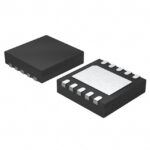 MPQ2483ADQ-AEC1-LF-Z

The activity of extra discounts on wholesale prices is in full swing…
Please fill in your contact information and we will send you the latest wholesale price list.





