 ChipApex | Global Electronic Components Supplier
SEARCH
Search Product
Search Post
— IC芯片 | 连接器 | 传感器 | 被动器件 —
Search productSearch post
— IC芯片 | 连接器 | 传感器 | 被动器件 —
Consult the customer manager about the wholesale price.
consultation hotline:86-132-6715-2157
email:[email protected]
Contact the product manager for consultation. One-stop consultation is available.
Do you want a lower wholesale price? Please send us your inquiry and we will reply immediately.
The MPR121QR2 is a proximity capacitive touch sensor controller manufactured by NXP USA Inc. (formerly Freescale). It features 12 independent capacitance sensing inputs and one simulated proximity electrode, enabling multi-touch and near-proximity detection. The device operates within a voltage range of 1.71V to 3.6V, consuming 29 μA in typical run mode at a 16 ms sampling interval and 3 μA in scan stop mode. It utilizes an I²C interface with configurable addresses (0x5A–0x5D) and includes hardware autoconfiguration, digital filtering, and debounce logic. The component is housed in a 3 mm x 3 mm x 0.65 mm 20-lead QFN package.
Verify the specific ordering suffix QR2 corresponds to the -40°C to +85°C temperature range and the 20-Pin QFN case number 2059. Confirm that the shipping configuration matches the required Tape & Reel format. Ensure the default I²C address aligns with your system design or configure the ADDR pin appropriately.
Select this component for applications requiring robust capacitive touch interfaces with minimal MCU overhead. The integrated baseline tracking and filtering reduce software complexity. Ensure the power supply architecture supports the 1.71V to 3.6V range and consider the bypass capacitor requirements for VDD and VREG pins depending on the operating voltage.
The MPR121QR2 belongs to the second-generation MPR121 series of sensor controllers, succeeding the initial MPR03x devices. It represents an evolution in capacitance detection technology by Freescale, offering increased internal intelligence and enhanced electrode counts compared to its predecessors.
Public confirmed substitute part numbers are not available in the provided documentation. Verify compatibility with existing designs if considering alternative sensors.
The I²C address is hardware-configurable by connecting the ADDR pin to VSS, VDD, SDA, or SCL lines, resulting in addresses of 0x5A, 0x5B, 0x5C, or 0x5D respectively.
The 13th electrode is a simulated channel formed by simultaneously charging all connected electrodes. It allows for greater near-proximity detection distance and a larger sensing area while separate electrodes handle touch detection.
Yes, the device can operate down to 1.71V. In this range, the internal voltage regulator must be bypassed by connecting the VDD and VREG pins together, ensuring the supply does not exceed 2.75V.
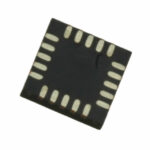 MPR121QR2
The activity of extra discounts on wholesale prices is in full swing…
Please fill in your contact information and we will send you the latest wholesale price list.






