ChipApex | Global Electronic Components Supplier
SEARCH
Search Product
Search Post
— IC芯片 | 连接器 | 传感器 | 被动器件 —
Search productSearch post
— IC芯片 | 连接器 | 传感器 | 被动器件 —
Consult the customer manager about the wholesale price.
consultation hotline:86-132-6715-2157
email:[email protected]
Contact the product manager for consultation. One-stop consultation is available.
Do you want a lower wholesale price? Please send us your inquiry and we will reply immediately.
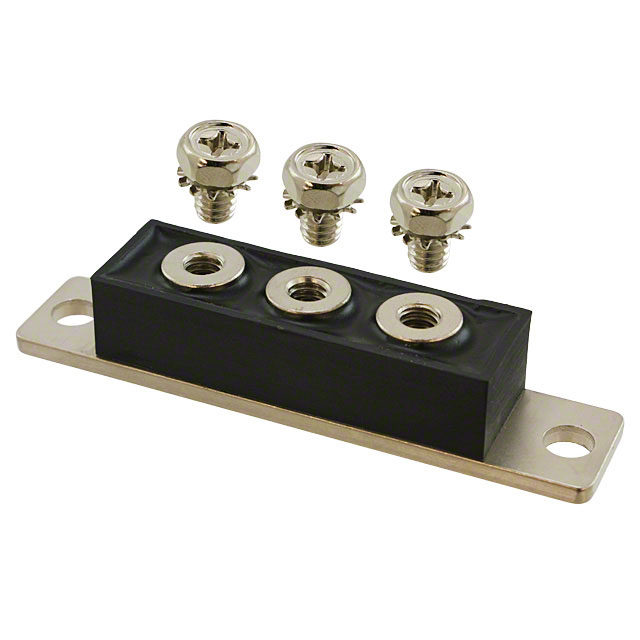
The MSRT250100A is a standard recovery diode array manufactured by GeneSiC Semiconductor. It features a common cathode configuration with two individual diodes housed in a single module. The device supports a maximum DC reverse voltage of 1000 V and an average rectified current of 250 A. It utilizes silicon technology and is designed for chassis mounting in a three-tower package structure. The component operates within a specified temperature range suitable for industrial power applications.
Verify the specific suffix designation against official GeneSiC Semiconductor documentation to ensure exact electrical characteristics match project requirements. Confirm mechanical dimensions and mounting hole patterns align with thermal management solutions. Request updated datasheets to validate compliance with current RoHS directives and material declarations before finalizing procurement orders.
Select this component when designing circuits necessitating high-voltage isolation and substantial continuous current flow. Evaluate thermal dissipation requirements based on the 250 A rating and forward voltage drop characteristics. Ensure the chassis mounting style integrates effectively with existing heat sink infrastructure. Compare leakage current specifications at maximum operating temperatures to guarantee reliability under stress conditions.
This part belongs to the MSRT series of discrete semiconductor products from GeneSiC Semiconductor, now associated with Navitas Semiconductor. The series focuses on high-power diode modules utilizing standard silicon technology. These components are engineered for robust performance in demanding power electronics environments, offering reliable rectification capabilities for heavy-duty industrial applications.
Consult official cross-reference lists for direct substitutes. Verify pinout compatibility and thermal resistance values when evaluating alternative manufacturers. Ensure replacement parts maintain identical voltage and current ratings to prevent system failure.
 MSRT250100A
The activity of extra discounts on wholesale prices is in full swing…
Please fill in your contact information and we will send you the latest wholesale price list.