 ChipApex | Global Electronic Components Supplier
SEARCH
Search Product
Search Post
— IC芯片 | 连接器 | 传感器 | 被动器件 —
Search productSearch post
— IC芯片 | 连接器 | 传感器 | 被动器件 —
Consult the customer manager about the wholesale price.
consultation hotline:86-132-6715-2157
email:[email protected]
Contact the product manager for consultation. One-stop consultation is available.
Do you want a lower wholesale price? Please send us your inquiry and we will reply immediately.
The MTCH101T-I/OT is a single-channel capacitive proximity detector manufactured by Microchip Technology. It operates within a supply voltage range of 2.0V to 5.5V and supports an industrial temperature range from -40°C to +85°C. The device integrates high signal-to-noise ratio detection with adjustable sensitivity via the MTSA pin. It features two power modes: Normal mode consumes approximately 120µA at 3.3V, while Low-Power mode reduces consumption to roughly 54µA. Response times vary between 76ms and 890ms depending on configuration. The component is housed in a 6-lead SOT-23 package.
Verify the ordering suffix 'T' confirms tape and reel packaging rather than standard bulk. Confirm the 'I' designation matches the required industrial temperature range of -40°C to +85°C. Ensure the 'OT' suffix corresponds to the 6-pin SOT-23 package type. Cross-reference the specific revision level against current datasheet documentation.
Select this component for applications requiring a single-channel proximity sensor with minimal external components. The MTCH101 supports various conductive sensor materials including copper pads, silver ink, and ITO. Sensitivity can be dynamically adjusted using a DAC or PWM signal from a host microcontroller. The active-low output simplifies integration with digital inputs.
The MTCH101 belongs to Microchip's family of simple capacitive touch sensors. It provides a standalone solution for proximity detection without complex calibration routines. The device utilizes advanced optimization algorithms to suppress noise and maintain reliable detection through non-conductive front panels like plastic or wood.
Public confirmed substitute part numbers are not available in the provided documentation.
Sensitivity is adjusted via the MTSA pin. Applying VDD results in the lowest sensitivity, while GND provides the highest. It can be set statically with a resistor ladder or dynamically using a DAC or PWM signal.
The device can be reset by toggling the MTPM pin with a pulse of at least 4.5 ms, or by touching the sensor pad and then releasing it. This releases the proximity-detected state without repowering the device.
No, the datasheet specifies that the device works through plastic, glass, or wood front panels. It does not list metal as a supported material for the front panel covering the sensor.
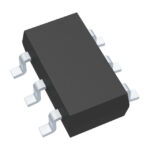 MTCH101T-I/OT
The activity of extra discounts on wholesale prices is in full swing…
Please fill in your contact information and we will send you the latest wholesale price list.





