 ChipApex | Global Electronic Components Supplier
SEARCH
Search Product
Search Post
— IC芯片 | 连接器 | 传感器 | 被动器件 —
Search productSearch post
— IC芯片 | 连接器 | 传感器 | 被动器件 —
Consult the customer manager about the wholesale price.
consultation hotline:86-132-6715-2157
email:[email protected]
Contact the product manager for consultation. One-stop consultation is available.
Do you want a lower wholesale price? Please send us your inquiry and we will reply immediately.
The MTCH102T-I/MU is a capacitive proximity and touch controller from the Microchip mTouch family, designed for applications requiring simple digital output interfaces. It implements two sensor inputs with active guarding capability to suppress noise and ensure reliable detection. The device operates within a voltage range of 2.05V to 3.6V and supports an operating temperature range of -40°C to +85°C. Sensitivity and power modes are configurable via dedicated pins, allowing optimization for different sensor sizes and environmental conditions. The component utilizes advanced algorithms for automatic environmental compensation and multi-stage active noise suppression.
Verify the specific ordering suffix against official documentation to confirm package type and temperature grade. Ensure compatibility with system voltage requirements between 2.05V and 3.6V. Confirm pinout alignment for MTI and MTO connections during schematic design. Check for any recent product change notifications regarding assembly or material composition updates.
Select this model when a dual-channel capacitive touch solution with simple digital outputs is required. Consider the MTCH105 or MTCH108 if additional sensor channels are needed. Evaluate the need for active guarding features to mitigate interference in noisy environments. Ensure the application benefits from the flexible low-power mode and brown-out protection capabilities provided by this controller.
The MTCH102 belongs to the MTCH10x family, which includes the MTCH101, MTCH105, and MTCH108 variants. This family provides scalable solutions for proximity and touch detection using capacitive sensing technology. The devices share common architectural features such as active guarding and noise suppression algorithms, differing primarily in the number of sensor inputs and corresponding digital outputs available.
Direct substitutes within the same family include the MTCH105 and MTCH108 for increased channel counts. For single-channel applications, the MTCH101 may serve as a functional alternative. Verify that any replacement maintains compatibility with the existing sensor layout and interface requirements.
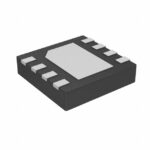 MTCH102T-I/MU
The activity of extra discounts on wholesale prices is in full swing…
Please fill in your contact information and we will send you the latest wholesale price list.





