 ChipApex | Global Electronic Components Supplier
SEARCH
Search Product
Search Post
— IC芯片 | 连接器 | 传感器 | 被动器件 —
Search productSearch post
— IC芯片 | 连接器 | 传感器 | 被动器件 —
Consult the customer manager about the wholesale price.
consultation hotline:86-132-6715-2157
email:[email protected]
Contact the product manager for consultation. One-stop consultation is available.
Do you want a lower wholesale price? Please send us your inquiry and we will reply immediately.
The MTCH105-I/ML is a capacitive proximity and touch controller from the Microchip mTouch family, designed for applications requiring simple digital output interfaces. It features five sensor inputs with active guarding capability to suppress noise and ensure reliable detection. The device operates within a voltage range of 2.05V to 3.6V and supports an operating temperature range of -40°C to +85°C. Sensitivity and power modes are configurable via external pins (MTSA and MTPM). It utilizes an advanced optimization algorithm for environmental compensation and multi-stage active noise suppression.
Verify the specific ordering suffix against official documentation to confirm package type and temperature grade. Ensure that any pin configuration changes or functional modifications associated with suffix variations are explicitly documented by the manufacturer before procurement.
Select this component when a system requires multiple independent touch or proximity inputs without complex communication protocols. The MTCH105 provides five channels suitable for replacing mechanical switches in consumer electronics where low firmware overhead and high noise immunity are critical design constraints.
This part belongs to the MTCH102/105/108 family of proximity/touch controllers. While sharing core architecture with the two-channel MTCH102 and eight-channel MTCH108, the MTCH105 specifically offers five sensor inputs. All variants utilize similar active guarding and noise suppression technologies.
Direct substitutes within the same family include the MTCH102 for fewer channels or the MTCH108 for more channels. Verify pin compatibility and channel count requirements before substituting.
Sensitivity is adjusted via the MTSA pin. Applying VDD results in the lowest sensitivity, while applying GND results in the highest sensitivity, with a linear voltage relationship between the two extremes.
The Guard pin (MTI2/Guard) drives a waveform in phase with the sensor input to shield it from nearby noise sources or power planes, minimizing voltage differences and improving signal integrity.
Grounding the MTPM pin places the device in Low-Power mode, which increases response time. Connecting MTPM to VDD enables faster response times at the cost of higher power consumption.
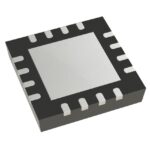 MTCH105-I/ML
The activity of extra discounts on wholesale prices is in full swing…
Please fill in your contact information and we will send you the latest wholesale price list.







