ChipApex | Global Electronic Components Supplier

SEARCH
Search Product
Search Post
— IC芯片 | 连接器 | 传感器 | 被动器件 —
Search productSearch post
— IC芯片 | 连接器 | 传感器 | 被动器件 —
Consult the customer manager about the wholesale price.
consultation hotline:86-132-6715-2157
email:[email protected]
Contact the product manager for consultation. One-stop consultation is available.
Do you want a lower wholesale price? Please send us your inquiry and we will reply immediately.
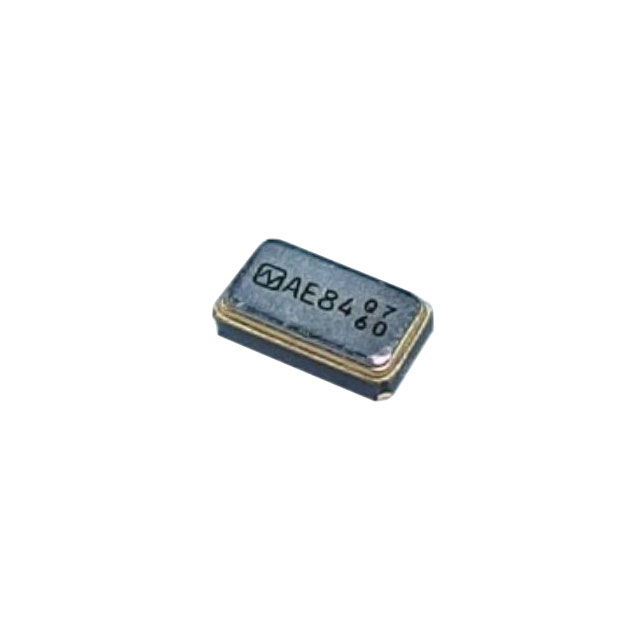
The MU01259-32.768K is a surface-mount crystal unit manufactured by NDK (NIHON DEMPA KOGYO CO., LTD). It operates at a nominal frequency of 32.768 kHz with a frequency tolerance of ±20 ppm and a load capacitance of 7 pF. The component utilizes a 2-SMD, no-lead package configuration, measuring approximately 2.5 mm in length and 1.2 mm in width. Designed for base mode operation, it features an equivalent series resistance (ESR) typically associated with low-power applications. The device complies with RoHS3 standards and holds an MSL rating of 1, indicating unlimited sensitivity to moisture.
Verify the specific suffix or revision code against the manufacturer's latest datasheet to ensure compatibility with current production batches. Confirm that the 7pF load capacitance matches the target oscillator circuit design requirements. Check for RoHS3 compliance documentation if environmental regulations apply to the final assembly. Ensure storage conditions adhere to MSL Level 1 guidelines to maintain component integrity prior to soldering.
Select this component when a small form factor is critical for the PCB layout. The 32.768 kHz frequency is standard for dividing down to one-second intervals in digital clocks. Consider the ±20 ppm tolerance against the system's overall timing accuracy requirements. Evaluate the 2-pin SMD package against available footprints in the schematic library. Compare ESR specifications with the host MCU's oscillator input capabilities to ensure reliable startup.
This part belongs to NDK's line of ultra-small crystal units designed for portable and mobile applications. The NX2012SE series designation often correlates with this physical size category. NDK leverages its expertise in artificial crystal cultivation to provide stable frequency references. These components are widely used in industries prioritizing miniaturization and energy efficiency, such as smartwatches and medical monitors.
STDCRS2-27M is listed as an equivalent part number in distributor databases, though frequency differences exist. Verify pinout and electrical parameters before substitution. No other direct substitutes are confirmed in the provided public data.
 MU01259-32.768K

The activity of extra discounts on wholesale prices is in full swing…
Please fill in your contact information and we will send you the latest wholesale price list.