 ChipApex | Global Electronic Components Supplier

SEARCH
Search Product
Search Post
— IC芯片 | 连接器 | 传感器 | 被动器件 —
Search productSearch post
— IC芯片 | 连接器 | 传感器 | 被动器件 —
Consult the customer manager about the wholesale price.
consultation hotline:86-132-6715-2157
email:[email protected]
Contact the product manager for consultation. One-stop consultation is available.
Do you want a lower wholesale price? Please send us your inquiry and we will reply immediately.
The MUX16AT/883C is a high-reliability analog multiplexer manufactured by Analog Devices Inc. under the Maxim Integrated brand, designed for military and aerospace applications. It features a 16-channel or dual 8-channel configuration using JFET technology to provide overvoltage protection. The device operates within a supply voltage range of 9V to 36V single supply or ±4.5V to ±18V dual supply. Key electrical parameters include an on-resistance of 200 Ohms maximum, input leakage current of 1nA maximum, and charge injection of 1pC typical. It supports signal ranges from -15V to +15V and functions reliably across an extended temperature range of -55°C to +125°C in a 28-pin ceramic flatpack package.
Verify authenticity through authorized distributors as this is a specialized military-grade component. Confirm the specific suffix indicates the correct reliability level and packaging. Check for obsolescence status since older Maxim products may have limited availability. Ensure compliance with export control regulations if applicable to your region. Request full traceability documentation upon purchase.
Select this part when overvoltage protection is critical without external circuitry. Consider the 200 Ohm on-resistance for signal attenuation requirements. Verify that the 28-lead ceramic package fits the mechanical constraints. Compare against ADG506 series for modern alternatives if military qualification is not strictly required.
This component belongs to the MUX16 family of JFET analog multiplexers known for their ruggedness. It is often used in place of standard CMOS switches where higher voltage tolerance and radiation hardness are needed. The /883C suffix denotes screening to MIL-STD-883 standards for enhanced reliability.
Direct replacements are limited due to the specific military screening. The ADG506ATE/883B is a related high-reliability option but requires verification of pin compatibility and performance differences. Modern ADG5xx series parts offer similar functionality but lack the same overvoltage protection profile.
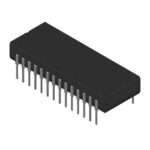 MUX16AT/883C

The activity of extra discounts on wholesale prices is in full swing…
Please fill in your contact information and we will send you the latest wholesale price list.





