 ChipApex | Global Electronic Components Supplier

SEARCH
Search Product
Search Post
— IC芯片 | 连接器 | 传感器 | 被动器件 —
Search productSearch post
— IC芯片 | 连接器 | 传感器 | 被动器件 —
Consult the customer manager about the wholesale price.
consultation hotline:86-132-6715-2157
email:[email protected]
Contact the product manager for consultation. One-stop consultation is available.
Do you want a lower wholesale price? Please send us your inquiry and we will reply immediately.
The MUX24BQ is a dual analog multiplexer manufactured by Analog Devices Inc., housed in a 16-CDIP package. It integrates two independent SP4T (single-pole four-throw) multiplexer circuits and one 4:1 demultiplexer circuit, providing a total of three switching functions within a single integrated circuit. The device features JFET input technology, which ensures high input impedance and low leakage current for accurate signal transmission. It includes built-in protection against overvoltage conditions and power supply loss, enhancing reliability in demanding environments. Designed for high-speed data acquisition and transmission applications, the MUX24BQ supports precise signal routing in mixed-signal systems.
Verify the specific ordering suffix to confirm package type and temperature range. Ensure compatibility with system voltage levels and interface requirements. Confirm availability through authorized distributors as supply status may vary. Check for RoHS compliance if required by project specifications. Validate pinout compatibility when replacing existing components in legacy designs.
Select the MUX24BQ for applications requiring multiple analog switches with high input impedance. Consider its JFET inputs for low-leakage signal integrity needs. Evaluate the integrated overvoltage and power loss protection for robust operation. Compare performance against single-channel alternatives to optimize board space. Verify that the CDIP package fits the available footprint and assembly process constraints.
The MUX24BQ belongs to Analog Devices' family of high-performance analog switches. It is designed for mixed-signal applications where reliable signal routing is critical. The component complements other interface solutions by offering multi-channel switching capabilities. Its design focuses on maintaining signal accuracy while providing environmental protection features suitable for industrial and aerospace use cases.
Public confirmed substitute part numbers include MUX24EP. Verify electrical parameters and pinout compatibility before substitution. Ensure the alternative meets the same overvoltage and power loss protection requirements.
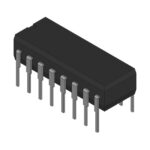 MUX24BQ

The activity of extra discounts on wholesale prices is in full swing…
Please fill in your contact information and we will send you the latest wholesale price list.





