 ChipApex | Global Electronic Components Supplier

SEARCH
Search Product
Search Post
— IC芯片 | 连接器 | 传感器 | 被动器件 —
Search productSearch post
— IC芯片 | 连接器 | 传感器 | 被动器件 —
Consult the customer manager about the wholesale price.
consultation hotline:86-132-6715-2157
email:[email protected]
Contact the product manager for consultation. One-stop consultation is available.
Do you want a lower wholesale price? Please send us your inquiry and we will reply immediately.
The MUX36S16IDWR is a single-channel, 16-to-1 analog multiplexer manufactured by Texas Instruments. It operates within a supply voltage range of 10V to 36V (single) or ±5V to ±18V (dual). Key electrical specifications include a maximum on-resistance of 170 ohms with a channel-to-channel matching of 6 ohms. The device features a maximum switch-on time of 136ns and switch-off time of 78ns. Off-state leakage current is limited to 40pA, while charge injection is specified at 0.67pC. Channel capacitance values are 3pF for source and 12.2pF for drain. It provides -99dB crosstalk at 1MHz and functions across an operating temperature range of -40°C to 125°C in a 28-SOIC package.
Verify the specific suffix IDWR corresponds to the 28-SOIC surface-mount package and industrial temperature grade. Confirm RoHS3 compliance status as indicated in official documentation. Ensure ESD handling procedures are followed due to CMOS construction. Cross-reference the manufacturer part number against authorized distributor listings to validate authenticity and traceability before procurement.
Select this component when a single 16-channel multiplexer is required with moderate on-resistance. Compare against MUX36S16IPWR if a TSSOP package is preferred instead of SOIC. Consider MUX36D08 variants if differential input configurations are needed rather than single-ended signals. Verify that the 170-ohm on-resistance meets the system's voltage drop requirements.
This part belongs to the MUX36xxx family of precision analog multiplexers from Texas Instruments. The series includes the MUX36S16 for single-ended applications and the MUX36D08 for differential configurations. These devices share common characteristics such as low leakage, low capacitance, and wide supply voltage ranges, designed for modern CMOS data acquisition environments.
MUX36S16IPWR offers identical electrical performance in a 28-TSSOP package. MUX36S16IRSNR provides the same functionality in a compact 32-QFN package. Verify pinout compatibility and thermal dissipation requirements when substituting between these package types.
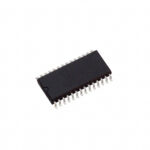 MUX36S16IDWR

The activity of extra discounts on wholesale prices is in full swing…
Please fill in your contact information and we will send you the latest wholesale price list.





