 ChipApex | Global Electronic Components Supplier

SEARCH
Search Product
Search Post
— IC芯片 | 连接器 | 传感器 | 被动器件 —
Search productSearch post
— IC芯片 | 连接器 | 传感器 | 被动器件 —
Consult the customer manager about the wholesale price.
consultation hotline:86-132-6715-2157
email:[email protected]
Contact the product manager for consultation. One-stop consultation is available.
Do you want a lower wholesale price? Please send us your inquiry and we will reply immediately.
The MUX508IPW is an analog multiplexer manufactured by Texas Instruments, configured as a single 8:1 circuit in a 16-TSSOP package. It operates on a single supply voltage of 10V to 36V or dual supplies of ±5V to ±18V. Key electrical parameters include a maximum on-state resistance of 170 ohms with a channel-to-channel matching of 2.4 ohms. The device features low charge injection of 0.3pC and off-state leakage current of 1nA. Switching times are specified at a maximum of 136ns for turn-on and 75ns for turn-off. It supports an operating temperature range from -40°C to 125°C.
Verify the specific suffix IPW corresponds to the 16-TSSOP tube packaging when sourcing. Confirm that the required on-resistance and switching speed specifications align with the 170-ohm and 136ns/75ns limits defined in the official datasheet. Ensure compatibility with TTL logic thresholds if interfacing directly with standard digital controllers.
Select this component when an 8:1 multiplexing ratio is required alongside low distortion characteristics. The 170-ohm on-resistance suits applications where moderate signal loss is acceptable. Consider the 16-TSSOP footprint for board space constraints. Verify that the 10V minimum single-supply requirement fits the system power architecture compared to lower-voltage alternatives.
This part belongs to the MUX50x family of CMOS analog multiplexers, which also includes the MUX509. While the MUX508 provides a single 8:1 path, the MUX509 offers different configurations such as dual 4:1 channels. Both share similar electrical performance metrics including low leakage and charge injection, designed for precision signal switching in industrial and portable environments.
The MUX508IDR serves as a pin-compatible alternative offering the same electrical specifications but housed in a 16-SOIC package instead of TSSOP. Designers must verify footprint compatibility during substitution. Other members of the MUX50x family may require schematic adjustments due to differing channel configurations.
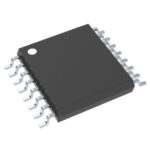 MUX508IPW

The activity of extra discounts on wholesale prices is in full swing…
Please fill in your contact information and we will send you the latest wholesale price list.





