ChipApex | Global Electronic Components Supplier

SEARCH
Search Product
Search Post
— IC芯片 | 连接器 | 传感器 | 被动器件 —
Search productSearch post
— IC芯片 | 连接器 | 传感器 | 被动器件 —
Consult the customer manager about the wholesale price.
consultation hotline:86-132-6715-2157
email:[email protected]
Contact the product manager for consultation. One-stop consultation is available.
Do you want a lower wholesale price? Please send us your inquiry and we will reply immediately.
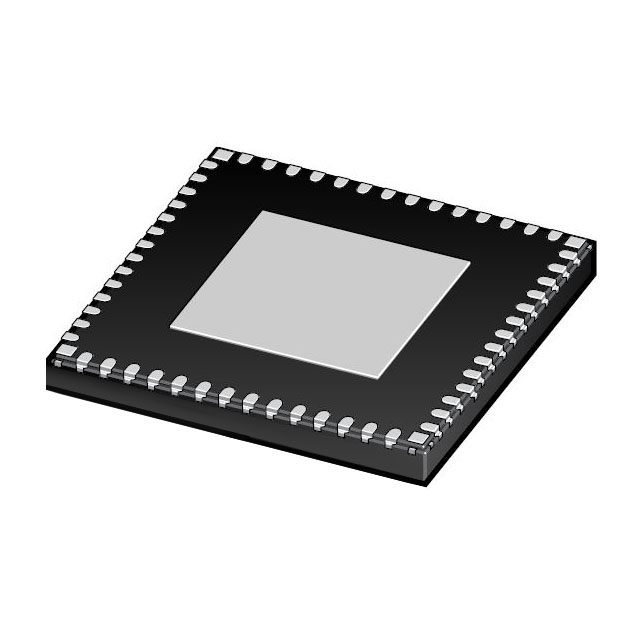
The MVR5510AMBANESR2 is an automotive safety power management IC from NXP Semiconductors, designed for ASIL B compliance. It integrates multiple voltage regulators within a QFN-56 package. The device features three buck converters and one boost converter, alongside four low-dropout (LDO) regulators. Output currents include 800 mA, 1 A, and 3.6 A capabilities. Maximum output voltage reaches 5 V. Operating temperature range spans from -40°C to +125°C. Input voltage support extends up to 60V. This component serves as a specialized PMIC for complex automotive electronic architectures requiring high reliability.
Verify the exact suffix ANESR2 against official NXP documentation to confirm package type and tape/reel specifications. Ensure compatibility with ASIL B requirements for your specific design. Cross-reference the datasheet for thermal performance under load. Confirm availability through authorized distributors as supply status may vary. Validate pinout alignment with your PCB layout before procurement.
Select this component when designing automotive electronics requiring integrated power management with functional safety certification. Consider the specific current demands of your loads against the 800 mA, 1 A, and 3.6 A outputs. Evaluate the 60V input range against your vehicle's power bus. The QFN-56 package requires appropriate thermal management strategies. Ensure the ASIL B rating meets your system's safety integrity level requirements.
This part belongs to the VR5510 series of automotive PMICs from NXP. These devices target high-performance automotive domains where reliability and safety are critical. The series offers various configurations to suit different application needs. The MVR5510AMBANESR2 specifically provides a balanced mix of switching and linear regulators. It supports modern automotive electronic architectures demanding consolidated power solutions.
Consult NXP official substitution lists for verified alternatives. Check for equivalent ASIL ratings and pin compatibility. Verify that any substitute maintains the required input voltage range and output current capabilities. Ensure thermal characteristics match your design constraints. Do not assume cross-compatibility without official manufacturer confirmation.
 MVR5510AMBANESR2

The activity of extra discounts on wholesale prices is in full swing…
Please fill in your contact information and we will send you the latest wholesale price list.