ChipApex | Global Electronic Components Supplier

SEARCH
Search Product
Search Post
— IC芯片 | 连接器 | 传感器 | 被动器件 —
Search productSearch post
— IC芯片 | 连接器 | 传感器 | 被动器件 —
Consult the customer manager about the wholesale price.
consultation hotline:86-132-6715-2157
email:[email protected]
Contact the product manager for consultation. One-stop consultation is available.
Do you want a lower wholesale price? Please send us your inquiry and we will reply immediately.
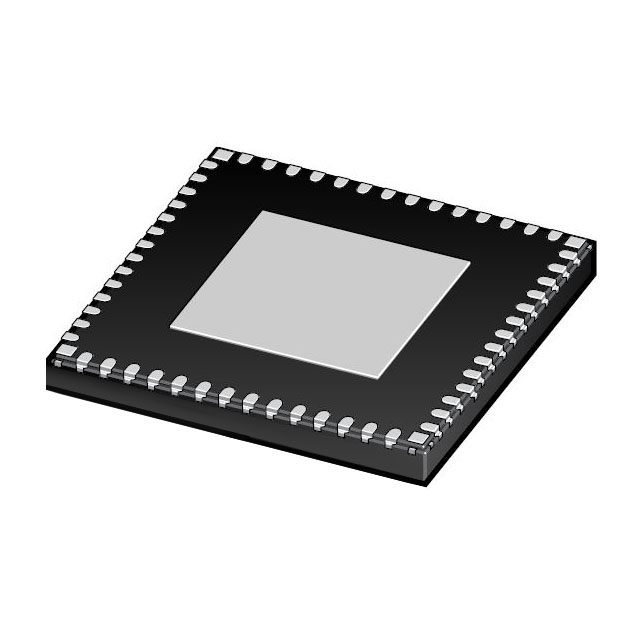
The MVR5510AMDA0ES is an automotive multi-output power management IC from the VR5510 series, designed for ASIL D safety compliance. It operates within a 2.7 V to 60 V input voltage range and supports a maximum operating temperature of +125 °C with a minimum of -40 °C. The device integrates multiple high-efficiency synchronous buck regulators, including configurable single/dual-phase low-voltage buck stages and a configurable VPRE synchronous buck controller using external MOSFETs. Output currents include 400 mA, 800 mA, and 3.6 A variants. It is housed in a QFN-56 package and meets AEC-Q100 qualification standards.
Verify the specific suffix (e.g., DA0ES) against official NXP documentation to confirm exact pinout, output configuration, and tape-and-reel specifications. Ensure compatibility with the target PCB footprint and thermal design requirements for the QFN-56 package. Confirm AEC-Q100 qualification status and ASIL D safety manual alignment for the intended automotive application before finalizing procurement.
Select this component for systems requiring ASIL D certified power management with flexible buck regulator configurations. Consider the 60 V input tolerance and wide operating temperature range for harsh automotive environments. Evaluate the need for external MOSFETs for the VPRE stage and ensure sufficient board space for the QFN-56 package and thermal dissipation.
Part of the NXP VR5510 family of automotive PMICs, specifically tailored for S32G platform support. It complements other NXP power solutions like the PF51x3 and PF0300 by offering specialized multi-output capabilities with high integration levels for domain control architectures.
Consult NXP official substitution lists for verified alternatives. Generic cross-references are not recommended due to strict ASIL D safety requirements and specific pinout configurations unique to the VR5510 family.
The device supports a maximum DC input voltage of 60 V.
Yes, it is AEC-Q100 qualified and designed for ASIL D safety compliance in automotive applications.
 MVR5510AMDA0ES

The activity of extra discounts on wholesale prices is in full swing…
Please fill in your contact information and we will send you the latest wholesale price list.