ChipApex | Global Electronic Components Supplier

SEARCH
Search Product
Search Post
— IC芯片 | 连接器 | 传感器 | 被动器件 —
Search productSearch post
— IC芯片 | 连接器 | 传感器 | 被动器件 —
Consult the customer manager about the wholesale price.
consultation hotline:86-132-6715-2157
email:[email protected]
Contact the product manager for consultation. One-stop consultation is available.
Do you want a lower wholesale price? Please send us your inquiry and we will reply immediately.
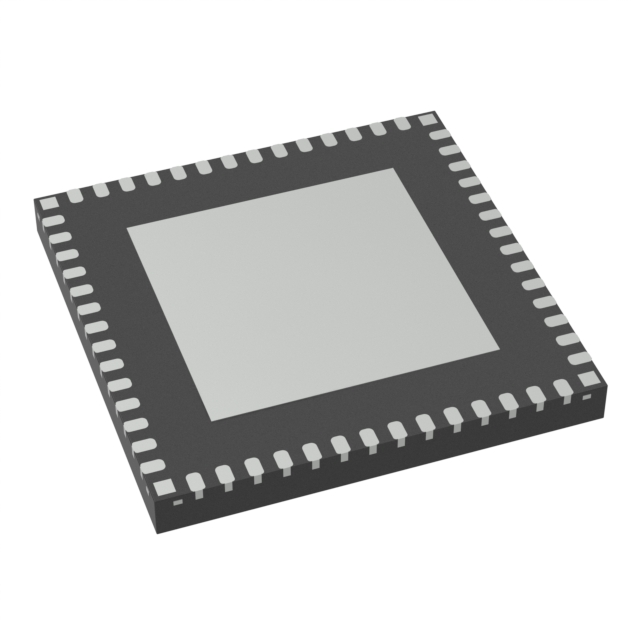
The MVR5510AVMA4EP is a high-voltage automotive multi-output power management IC from the VR5510 series, designed for high-performance applications. It integrates three buck converters, one boost converter, and four low-dropout (LDO) regulators within a single QFN-56 package. The device supports an input voltage up to 60V and operates reliably across a temperature range of -40°C to +125°C. Output currents vary by regulator type, with specific channels providing up to 800 mA, 1 A, or 3.6 A, while maximum output voltages reach 5 V.
Verify the complete part number including suffixes such as EP or TSR, as these indicate specific packaging or tape-and-reel configurations. Confirm RoHS compliance status directly with NXP Semiconductors documentation. Ensure compatibility with your board layout regarding the QFN-56 footprint. Check current availability through authorized distributors as stock levels fluctuate. Validate that the 60V input rating aligns with your system's electrical specifications.
Select this component when a single IC can replace multiple discrete power stages in automotive designs. Consider the integrated safety features if functional safety standards are required. Evaluate the total channel count against your load requirements to ensure sufficient headroom. The high-voltage tolerance simplifies front-end protection circuitry. Compare pin-out compatibility with existing designs if migrating from older PMIC families.
This device belongs to the VR5510 family of multi-channel high-voltage PMICs developed by NXP Semiconductors. The family targets demanding automotive and industrial sectors where reliability and integration density are critical. The MVR5510AVMA4EP variant specifically denotes the configuration with three buck, one boost, and four LDO outputs in a QFN-56 package.
Direct substitutes include other variants within the VR5510 series such as MVR5510AVMA0EP or MVR5510AVMA6EP, depending on the required number of output channels. Verify pin-to-pin compatibility and electrical parameter alignment before substitution.
 MVR5510AVMA4EP

The activity of extra discounts on wholesale prices is in full swing…
Please fill in your contact information and we will send you the latest wholesale price list.