 ChipApex | Global Electronic Components Supplier

SEARCH
Search Product
Search Post
— IC芯片 | 连接器 | 传感器 | 被动器件 —
Search productSearch post
— IC芯片 | 连接器 | 传感器 | 被动器件 —
Consult the customer manager about the wholesale price.
consultation hotline:86-132-6715-2157
email:[email protected]
Contact the product manager for consultation. One-stop consultation is available.
Do you want a lower wholesale price? Please send us your inquiry and we will reply immediately.
The MWCT1013VLH is a 15-watt wireless charging transmitter IC from NXP Semiconductors, designed for handheld consumer applications. It operates within an input voltage range of 2.7 V to 3.6 V and features a minimum output voltage of 1.22 V. The device integrates a 32-bit processor with 256k Flash memory and supports In-Field Reprogramming (IFR). It complies with Wireless Power Consortium (WPC) standards and functions across a temperature range of -40°C to +105°C. The component is housed in a 64-pin LQFP (10x10 mm) package suitable for surface mount technology.
Verify the specific ordering suffix and package variant against the official NXP datasheet to ensure compatibility with your design requirements. Confirm that the component meets all relevant regulatory standards for your target market. Check for moisture sensitivity levels and recommended baking procedures if the part has been exposed to humid conditions prior to assembly. Ensure the supplier provides valid traceability documentation.
Select this component when a dedicated 15-watt transmitter solution with integrated processing is required. The inclusion of flash memory and IFR support allows for customized control algorithms without external microcontrollers. Consider the thermal performance and operating temperature range relative to the enclosure design. Verify that the system architecture aligns with WPC compliance requirements for the intended application environment.
This part belongs to the MWCT1x1x series of wireless charging ICs from NXP Semiconductors. The series includes variants such as the MWCT1011A and MWCT1013A, which are specifically noted for automotive applications. These devices represent a consolidated approach to wireless power transmission by integrating power stage control and digital processing into a single package.
The MWCT1011A/1013A series serves as a related alternative, particularly for automotive contexts. Verify pinout compatibility and software configuration differences before substitution. No direct cross-references are confirmed in the provided data.
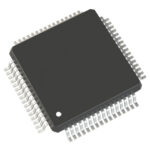 MWCT1013VLH

The activity of extra discounts on wholesale prices is in full swing…
Please fill in your contact information and we will send you the latest wholesale price list.





