 ChipApex | Global Electronic Components Supplier

SEARCH
Search Product
Search Post
— IC芯片 | 连接器 | 传感器 | 被动器件 —
Search productSearch post
— IC芯片 | 连接器 | 传感器 | 被动器件 —
Consult the customer manager about the wholesale price.
consultation hotline:86-132-6715-2157
email:[email protected]
Contact the product manager for consultation. One-stop consultation is available.
Do you want a lower wholesale price? Please send us your inquiry and we will reply immediately.
The NB2305AC1HDG is a commercial-grade, 3.3 V zero delay clock buffer manufactured by onsemi. It accepts one reference input and drives five low-skew outputs using an internal PLL locked to the REF pin. Operating within a frequency range of 15 MHz to 133 MHz, it ensures zero input-to-output propagation delay when outputs are uniformly loaded. The device features less than 250 ps output-to-output skew and under 200 ps cycle-to-cycle jitter. Packaged in an 8-pin SOIC (D suffix) with Pb-free compliance, it supports supply voltages from 3.0 V to 3.6 V.
Verify component authenticity through authorized channels as counterfeit risks exist for legacy parts. Confirm RoHS compliance status and package marking codes (e.g., '5C1H') match datasheet specifications. Check for moisture sensitivity handling requirements during storage and assembly. Ensure ordering suffixes align with specific temperature grades and packaging formats.
Select the NB2305AC1HDG for commercial temperature applications (0°C to 70°C). Use this variant over industrial versions (-40°C to 85°C) when thermal constraints allow. Ensure load capacitance matches the operating frequency: 30 pF for frequencies below 100 MHz and 10 pF for 100 MHz to 133 MHz. Verify that all outputs, including CLKOUT, have equal capacitive loading to maintain zero delay characteristics.
This component belongs to the NB2305A family of 3.3 V zero delay buffers. The 'C' suffix denotes the commercial temperature range, while '1H' indicates the high-drive version with faster rise and fall times compared to standard '-1' devices. It shares architectural similarities with other members like the NB2304A and NB2309A but offers a specific 1-to-5 output configuration.
Direct replacements include other NB2305A variants such as NB2305AI1HDG for industrial temperature ranges or NB2305AC1DG for lead-free rail packaging. Cross-manufacturer equivalents like the IDT2305 series may offer functional compatibility but require verification of electrical parameters and pinout alignment.
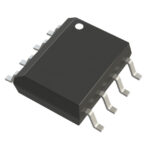 NB2305AC1HDG

The activity of extra discounts on wholesale prices is in full swing…
Please fill in your contact information and we will send you the latest wholesale price list.






