 ChipApex | Global Electronic Components Supplier
SEARCH
Search Product
Search Post
— IC芯片 | 连接器 | 传感器 | 被动器件 —
Search productSearch post
— IC芯片 | 连接器 | 传感器 | 被动器件 —
Consult the customer manager about the wholesale price.
consultation hotline:86-132-6715-2157
email:[email protected]
Contact the product manager for consultation. One-stop consultation is available.
Do you want a lower wholesale price? Please send us your inquiry and we will reply immediately.
The NCP1612A3DR2G is a high-efficiency power factor correction controller from onsemi, designed for boost pre-converter applications. It utilizes Current Controlled Frequency Fold-back (CCFF) to operate in Critical Conduction Mode (CrM), reducing frequency at low currents to minimize standby losses. The device features a VCC range of 9.5 V to 35 V and provides high drive capability with -500 mA/-800 mA output. It includes comprehensive protection features such as fast over-voltage protection, brown-out detection, and thermal shutdown. Packaged in SOIC-8, it supports line range detection and offers a pfcOK signal for downstream converter synchronization.
Verify the specific suffix DR2G against the manufacturer's current ordering guide to confirm package type and reel quantity. Ensure compatibility with the target application's voltage and current requirements. Check for any recent product change notifications that may affect pinout or electrical characteristics. Confirm RoHS compliance status if required by regulatory standards. Validate supplier authenticity through authorized distribution channels.
Select this component for applications requiring high power factor correction efficiency with minimal standby power consumption. The CCFF technology makes it suitable for variable load scenarios where efficiency at light loads is critical. Consider the SOIC-8 package for space-constrained designs. Evaluate the need for specific protection features like fast over-voltage protection before finalizing the design.
The NCP1612A series belongs to onsemi's portfolio of enhanced power factor controllers. It is part of a family offering multiple versions (A, B, A1, A2, A3, B2) tailored for different application needs. The NCP1612A3 variant specifically addresses requirements for medium-power offline applications, balancing performance and cost-effectiveness.
Direct replacements within the NCP1612A family include NCP1612A, NCP1612B, NCP1612A1, NCP1612A2, and NCP1612B2. Verify pinout compatibility and specific feature differences such as soft-start availability or protection thresholds when substituting.
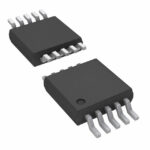 NCP1612A3DR2G
The activity of extra discounts on wholesale prices is in full swing…
Please fill in your contact information and we will send you the latest wholesale price list.






