 ChipApex | Global Electronic Components Supplier
SEARCH
Search Product
Search Post
— IC芯片 | 连接器 | 传感器 | 被动器件 —
Search productSearch post
— IC芯片 | 连接器 | 传感器 | 被动器件 —
Consult the customer manager about the wholesale price.
consultation hotline:86-132-6715-2157
email:[email protected]
Contact the product manager for consultation. One-stop consultation is available.
Do you want a lower wholesale price? Please send us your inquiry and we will reply immediately.
The NCP1612BDR2G is an active power factor correction (PFC) controller from onsemi, designed for offline applications. It utilizes a Current Controlled Frequency Foldback (CCFF) method to drive the PFC boost stage, optimizing efficiency across load ranges. The device operates in Critical Conduction Mode (CrM) and supports low standby losses. It features a wide VCC range suitable for high-impedance startup resistors and includes robust protection mechanisms such as fast output overvoltage protection and bulk under-voltage detection.
Verify the specific suffix 'B' against the manufacturer's official datasheet to confirm pinout compatibility and electrical characteristics relative to other variants like 'A'. Ensure the SOIC-8 package dimensions match the target PCB footprint. Confirm RoHS compliance status through the latest component certification documents provided by onsemi before finalizing procurement.
Select this component for medium-power offline applications requiring high efficiency and low standby power consumption. The CCFF architecture makes it suitable where minimizing light-load losses is critical. Consider the wide VCC range if designing for systems with limited startup current capabilities or high impedance bias networks. Evaluate thermal performance within the SOIC-8 package for the intended power density.
This part belongs to the NCP1612 series of PFC controllers. The series includes variants such as NCP1612A, NCP1612A1, NCP1612A2, NCP1612A3, and NCP1612B2. These devices share the core CCFF control methodology but may differ in startup voltage thresholds, VCC ranges, and specific protection feature configurations. The B variant is optimized for specific startup and operating voltage requirements compared to the A series.
Direct substitutes include other NCP1612 variants such as NCP1612B2 or NCP1612A2, depending on whether the application requires the specific startup characteristics of the B version or the lower start-up level of the A version. Verify that any replacement maintains the SOIC-8 package and compatible control logic for the existing boost converter design.
It uses a Current Controlled Frequency Foldback (CCFF) method that linearly reduces the switching frequency as the inductor current decreases, reaching approximately 20 kHz at null current, thereby minimizing losses at light loads.
Skip mode optimizes efficiency further by skipping cycles when the current is very low near the line zero-crossing, preventing inefficient power transmission during these periods.
Yes, the skip mode can be disabled by applying a 0.75 V offset to the FFcontrol pin if higher power factor quality is required at the expense of some efficiency.
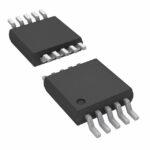 NCP1612BDR2G
The activity of extra discounts on wholesale prices is in full swing…
Please fill in your contact information and we will send you the latest wholesale price list.





