 ChipApex | Global Electronic Components Supplier
SEARCH
Search Product
Search Post
— IC芯片 | 连接器 | 传感器 | 被动器件 —
Search productSearch post
— IC芯片 | 连接器 | 传感器 | 被动器件 —
Consult the customer manager about the wholesale price.
consultation hotline:86-132-6715-2157
email:[email protected]
Contact the product manager for consultation. One-stop consultation is available.
Do you want a lower wholesale price? Please send us your inquiry and we will reply immediately.
The NCP1618LDR2G is a multimode power factor correction controller from onsemi. It operates with a supply voltage range of 9.5V to 35V and features a switching frequency of 130 kHz. The device utilizes a 9-pin SOIC package and supports surface mount installation. It transitions between Critical Conduction Mode (CrM) and Continuous Conduction Mode (CCM). The component is rated for operation within a temperature range of -40°C to +125°C and complies with RoHS standards.
Verify the specific suffix 'LDR2G' against official datasheets to confirm pinout and electrical characteristics, as variations exist within the NCP1618 family. Ensure compatibility with the target PCB footprint, specifically the 9-SOIC package dimensions. Confirm that the application environment remains within the specified operating temperature range of -40°C to +125°C. Validate that the supply voltage stays within the 9.5V to 35V limit during all operational phases.
Select this component when a multimode PFC solution is required to optimize efficiency across varying load conditions. The transition from CrM to CCM allows for improved light-load performance while maintaining high efficiency at full load. Consider the 130 kHz switching frequency for balancing EMI constraints and passive component size. Ensure the design accommodates the 9-pin SOIC thermal requirements for the intended power dissipation levels.
The NCP1618 series represents an innovative approach to power factor correction by combining multiple conduction modes. This technology addresses efficiency challenges in universal input applications. The LDR2G variant specifies the packaging and tape-and-reel configuration. It belongs to the broader category of PMIC power management integrated circuits designed for high-performance power conversion systems.
Direct substitutes include other models within the NCP1618 family, such as NCP1618BDR2G or NCP1618KDR2G, provided their specific electrical parameters and pinouts match the design requirements. Verify functional equivalence regarding mode transition behavior and control loop characteristics before substitution.
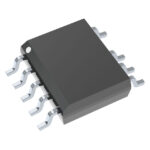 NCP1618LDR2G
The activity of extra discounts on wholesale prices is in full swing…
Please fill in your contact information and we will send you the latest wholesale price list.





