 ChipApex | Global Electronic Components Supplier
SEARCH
Search Product
Search Post
— IC芯片 | 连接器 | 传感器 | 被动器件 —
Search productSearch post
— IC芯片 | 连接器 | 传感器 | 被动器件 —
Consult the customer manager about the wholesale price.
consultation hotline:86-132-6715-2157
email:[email protected]
Contact the product manager for consultation. One-stop consultation is available.
Do you want a lower wholesale price? Please send us your inquiry and we will reply immediately.
The NCP1653DR2G is a Power Factor Correction (PFC) controller manufactured by onsemi, designed for continuous conduction mode (CCM) boost converters. It operates in a standard SOIC-8 package and supports switching frequencies of 65 kHz, 133 kHz, and 200 kHz. The device integrates essential features for compact PFC implementation, including direct power switch conduction time control based on coil current. It utilizes a specific current sensing technique compatible with low impedance sense resistors to minimize losses.
Verify the specific switching frequency variant required, as the NCP1653 series offers options for 65 kHz, 133 kHz, and 200 kHz. Confirm that the SOIC-8 package aligns with the target PCB layout constraints. Ensure compatibility with the intended low impedance current sensing resistor configuration to leverage the device's efficiency benefits. Cross-reference the datasheet for thermal dissipation requirements under maximum load conditions.
Select this component when designing CCM boost PFC converters requiring direct coil current-based control. It is suitable for applications prioritizing efficiency through low impedance current sensing. Consider the available frequency variants to match system timing requirements. This controller is appropriate for designs needing a rugged solution with integrated features for simplified implementation.
The NCP1653 serves as a foundational controller for CCM PFC applications, establishing a control scheme that simplifies boost converter design. It is part of a family that includes upgraded versions like the NCP1654, which adds brown-out detection while retaining core functionalities. The device represents a significant step toward compact and efficient PFC implementations by integrating precise current sensing capabilities directly into the controller architecture.
The NCP1654 is an upgraded version sharing the same control scheme and current sensing technique. Verify if additional features like brown-out detection are required before substituting.
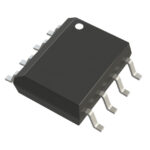 NCP1653DR2G
The activity of extra discounts on wholesale prices is in full swing…
Please fill in your contact information and we will send you the latest wholesale price list.







