ChipApex | Global Electronic Components Supplier
SEARCH
Search Product
Search Post
— IC芯片 | 连接器 | 传感器 | 被动器件 —
Search productSearch post
— IC芯片 | 连接器 | 传感器 | 被动器件 —
Consult the customer manager about the wholesale price.
consultation hotline:86-132-6715-2157
email:[email protected]
Contact the product manager for consultation. One-stop consultation is available.
Do you want a lower wholesale price? Please send us your inquiry and we will reply immediately.
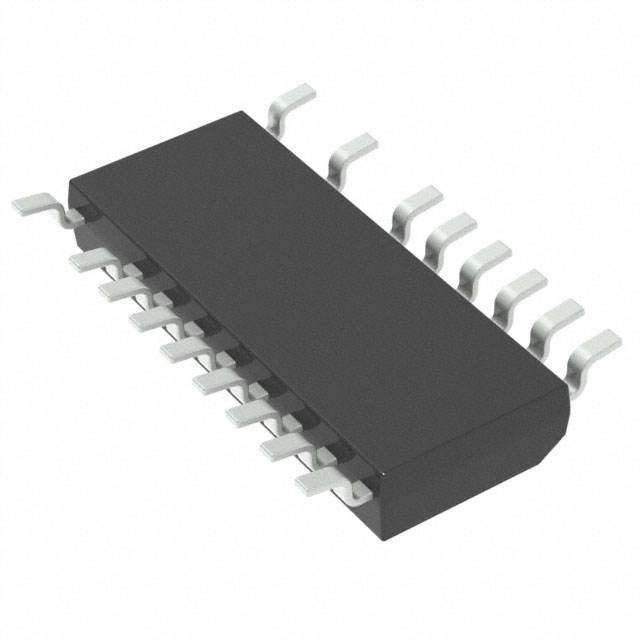
The NCP1937C4DR2G is a combination integrated circuit designed for Power Factor Correction (PFC) and Quasi-Resonant Flyback applications. It integrates PFC and quasi-resonant flyback controllers to implement compact, high-efficiency Switched Mode Power Supplies for adapters. The PFC stage operates in Critical Conduction Mode (CrM) with near-unity power factor and includes a maximum frequency clamp. The flyback stage utilizes proprietary valley-lockout circuitry for stable valley switching down to the fourth valley, toggling to frequency foldback mode beyond this point to eliminate audible noise.
Verify the specific suffix 'C4' against the manufacturer's official datasheet to confirm pinout and functional compatibility. Ensure the ordering part number matches the exact package and tape/reel specifications required for your assembly process. Cross-reference the RoHS status and material declaration documents provided by onsemi to meet environmental compliance requirements for your target market.
Select this component when a single-chip solution for both PFC and secondary-side regulation is required to minimize board space. It is suitable for designs prioritizing high efficiency and low acoustic noise through valley switching and frequency foldback features. Consider the integration level if external component count reduction is a primary design constraint for adapter applications.
This device belongs to the NCP1937 family of combination controllers from onsemi. These ICs are engineered specifically for AC-DC conversion systems where size and efficiency are critical. The family typically offers variations in packaging and specific feature sets while maintaining the core dual-controller architecture for PFC and flyback topologies.
Consult the official onsemi documentation for direct pin-to-pin compatible alternatives within the NCP1937 series. Verify that any substitute maintains the same CrM PFC and quasi-resonant flyback functionality. Ensure thermal and electrical characteristics match the original design requirements before implementation.
 NCP1937C4DR2G
The activity of extra discounts on wholesale prices is in full swing…
Please fill in your contact information and we will send you the latest wholesale price list.