 ChipApex | Global Electronic Components Supplier

SEARCH
Search Product
Search Post
— IC芯片 | 连接器 | 传感器 | 被动器件 —
Search productSearch post
— IC芯片 | 连接器 | 传感器 | 被动器件 —
Consult the customer manager about the wholesale price.
consultation hotline:86-132-6715-2157
email:[email protected]
Contact the product manager for consultation. One-stop consultation is available.
Do you want a lower wholesale price? Please send us your inquiry and we will reply immediately.
The NCP392BRFCCT1G is a high-performance, low-noise Low Dropout (LDO) voltage regulator manufactured by onsemi. It features an ultra-low noise architecture designed for sensitive analog and RF applications. The device provides a fixed output voltage of 1.8V with a maximum load current capability of 300mA. It incorporates a high Power Supply Rejection Ratio (PSRR) to effectively suppress input ripple and noise across a wide frequency range. The regulator includes built-in protection mechanisms such as thermal shutdown and current limiting to ensure reliable operation under fault conditions. It is housed in a compact WLCSP package suitable for space-constrained designs.
Verify the complete part number including suffixes against official onsemi documentation to confirm specific tape-and-reel quantities and packaging variants. Ensure compatibility with the target PCB footprint for the WLCSP package. Cross-reference the datasheet revision date to confirm the latest electrical characteristics and ordering information before finalizing procurement.
Select this component when low noise and high PSRR are critical requirements for powering sensitive downstream circuitry. The fixed 1.8V output suits systems operating at this specific logic or analog rail voltage. Consider the 300mA current limit when sizing for peak load demands. The WLCSP package offers a small form factor advantage over traditional SOT packages but requires appropriate assembly processes for flip-chip technology.
This LDO belongs to onsemi's portfolio of precision voltage regulators designed for modern portable and wireless applications. It complements other low-dropout regulators in the series that offer different output voltages or current capabilities. The device addresses the increasing demand for clean power in miniaturized electronic systems where noise immunity is paramount for signal integrity.
Check for direct pin-compatible alternatives within the same family offering different output voltages if system requirements change. Verify equivalent noise specifications and current ratings when considering third-party replacements to maintain performance parity in sensitive RF paths.
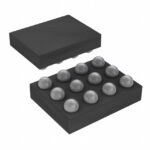 NCP392BRFCCT1G

The activity of extra discounts on wholesale prices is in full swing…
Please fill in your contact information and we will send you the latest wholesale price list.





