 ChipApex | Global Electronic Components Supplier

SEARCH
Search Product
Search Post
— IC芯片 | 连接器 | 传感器 | 被动器件 —
Search productSearch post
— IC芯片 | 连接器 | 传感器 | 被动器件 —
Consult the customer manager about the wholesale price.
consultation hotline:86-132-6715-2157
email:[email protected]
Contact the product manager for consultation. One-stop consultation is available.
Do you want a lower wholesale price? Please send us your inquiry and we will reply immediately.
The NCP392CSFCCT1G is a synchronous buck converter manufactured by onsemi, designed for high-efficiency power conversion in compact applications. It integrates high-side and low-side MOSFETs within a single package to minimize external component count and board space. The device operates with an input voltage range of 2.5 V to 5.5 V and provides a regulated output current capability of up to 3 A. It features a fixed switching frequency of 3 MHz, enabling the use of small inductors and capacitors. The controller supports dynamic voltage scaling via an I2C interface for precise output voltage adjustment. Additional integrated protections include over-current protection, thermal shutdown, and soft-start functionality to ensure reliable operation under various load conditions.
Verify the complete part number including suffixes such as 'SFCCT1G' to ensure correct packaging and tape-and-reel specifications. Confirm that the intended application voltage and current requirements align with the device's operational limits. Check for RoHS compliance status if required by specific regulatory standards. Ensure proper handling procedures are followed due to the sensitive nature of the semiconductor components.
Select this component when board space is limited and high efficiency is required for low-voltage, high-current applications. The integrated MOSFETs simplify design compared to discrete solutions. Consider the 3 MHz switching frequency for smaller filter components but verify electromagnetic interference compatibility. Ensure the control interface matches the system's communication protocol for voltage adjustment capabilities.
This device belongs to onsemi's NCP39x series of synchronous buck converters, which are optimized for powering digital logic circuits. The series offers various current ratings and packaging options to suit different power density requirements. These controllers are commonly used in modern electronic systems where size and efficiency are critical design constraints.
Consult official manufacturer documentation for verified equivalent part numbers. Cross-reference pinouts and electrical characteristics carefully before substitution. Generic replacements may not match the integrated protection features or control interface compatibility.
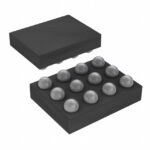 NCP392CSFCCT1G

The activity of extra discounts on wholesale prices is in full swing…
Please fill in your contact information and we will send you the latest wholesale price list.





