 ChipApex | Global Electronic Components Supplier

SEARCH
Search Product
Search Post
— IC芯片 | 连接器 | 传感器 | 被动器件 —
Search productSearch post
— IC芯片 | 连接器 | 传感器 | 被动器件 —
Consult the customer manager about the wholesale price.
consultation hotline:86-132-6715-2157
email:[email protected]
Contact the product manager for consultation. One-stop consultation is available.
Do you want a lower wholesale price? Please send us your inquiry and we will reply immediately.
The NCP431AVDR2G is a three-terminal programmable shunt regulator diode from onsemi, operating within an ambient temperature range of -40°C to +125°C. It features a typical reference input voltage tolerance of ±1% at 25°C and maintains stability across the full rated temperature range. The device supports a cathode current range of 40 µA to 100 mA with a typical dynamic impedance of 0.22 Ω. It utilizes an SOIC-8 package (D Suffix) and is supplied in tape and reel quantities of 2500 units.
Verify the specific suffix 'AV' confirms the -40°C to +125°C temperature grade and 'DR2G' indicates the SOIC-8 tape and reel packaging configuration. Confirm that the ordering code matches the exact tolerance requirements for the intended application, as other suffixes denote different temperature ranges or package types. Ensure compatibility with the required assembly location and lot traceability if automotive qualification is necessary.
Select this component when a wide operating temperature range is required compared to standard commercial variants. The low minimum cathode current makes it ideal for applications demanding extremely low no-load consumption in secondary side regulation. Consider the dynamic impedance characteristics for noise-sensitive designs and ensure adequate load capacitance is applied to maintain loop stability during transient conditions.
This device belongs to the NCP431/NCP432 series of programmable precision references manufactured by onsemi. It serves as a direct replacement for traditional Zener diodes in various analog and digital circuitry. The series includes multiple variants differentiated by temperature grades and package styles, such as SOT-23 and TO-92, allowing flexibility in board space and thermal management requirements.
NCP431BIDR2G
The absolute maximum rating for the cathode-to-anode voltage is 37 V.
Stability depends on the load capacitance and cathode current; designers should consult the stability boundary curves in the datasheet to determine appropriate compensation.
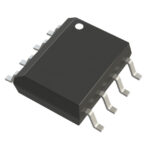 NCP431AVDR2G

The activity of extra discounts on wholesale prices is in full swing…
Please fill in your contact information and we will send you the latest wholesale price list.






