 ChipApex | Global Electronic Components Supplier

SEARCH
Search Product
Search Post
— IC芯片 | 连接器 | 传感器 | 被动器件 —
Search productSearch post
— IC芯片 | 连接器 | 传感器 | 被动器件 —
Consult the customer manager about the wholesale price.
consultation hotline:86-132-6715-2157
email:[email protected]
Contact the product manager for consultation. One-stop consultation is available.
Do you want a lower wholesale price? Please send us your inquiry and we will reply immediately.
The NCP431BVSNT1G is a programmable precision shunt reference from the NCP431 series, manufactured by onsemi. It operates as a low temperature coefficient Zener diode, adjustable from Vref to 36 V using two external resistors. The device features a typical voltage reference tolerance of ±0.5% at 25°C and an equivalent full-range temperature coefficient of 50 ppm/°C. It supports a cathode current range of 40 µA to 100 mA with a typical dynamic impedance of 0.22 Ω. Qualified under AEC-Q100 standards, it functions within an ambient temperature range of -40°C to +125°C.
Verify that the specific ordering suffix matches the required temperature grade and package configuration for your design. Confirm AEC-Q100 qualification status if automotive compliance is mandatory. Ensure the SOT-23-3 footprint aligns with your PCB layout constraints. Cross-reference the manufacturer part number against official distributor catalogs to confirm authenticity and revision level before finalizing procurement orders.
Select this component when high precision and wide temperature stability are required for shunt regulation applications. The NCP431B variant offers tighter tolerance compared to standard versions, making it suitable for sensitive analog circuits. Consider the low minimum operating current for battery-powered or low-power standby modes. Verify that the 36 V maximum cathode-to-anode voltage exceeds your circuit's peak operating requirements.
This device belongs to the NCP431/SC431 family of programmable precision references. It serves as a direct replacement for traditional Zener diodes in many applications, offering superior stability and adjustability. The SC prefix indicates automotive-grade manufacturing with unique site and control change requirements, distinguishing it from commercial variants like the NCP431BV.
NCP431BISNT1G
Pin 1 is the Reference input, Pin 2 is the Cathode, and Pin 3 is the Anode.
The NCP431BVSNT1G has a tighter voltage reference tolerance of ±0.5%, whereas the NCP431AVSNT1G typically has a ±1% tolerance. Both share the same extended temperature range and package.
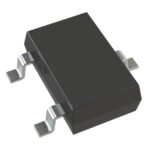 NCP431BVSNT1G

The activity of extra discounts on wholesale prices is in full swing…
Please fill in your contact information and we will send you the latest wholesale price list.





