 ChipApex | Global Electronic Components Supplier

SEARCH
Search Product
Search Post
— IC芯片 | 连接器 | 传感器 | 被动器件 —
Search productSearch post
— IC芯片 | 连接器 | 传感器 | 被动器件 —
Consult the customer manager about the wholesale price.
consultation hotline:86-132-6715-2157
email:[email protected]
Contact the product manager for consultation. One-stop consultation is available.
Do you want a lower wholesale price? Please send us your inquiry and we will reply immediately.
The NCR321UX is a linear LED driver IC manufactured by Nexperia USA Inc., designed for constant current regulation in surface-mount applications. It integrates an NPN transistor with two diodes on a single chip within an SOT457 (SC-74; TSOP6) plastic package. The device supports a stabilized output current of 10 mA without external components, adjustable up to 250 mA via an external resistor. It features a low voltage overhead of 1.4 V and supports digital PWM input up to 10 kHz for dimming control. Qualified under AEC-Q101 standards, it operates with a supply voltage up to 16 V and handles power dissipation up to 750 mW.
Verify the specific suffix 'U' corresponds to the SOT457 package configuration when sourcing. Confirm AEC-Q101 qualification requirements match target automotive reliability standards. Ensure design accounts for the 750 mW power dissipation limit and 16 V maximum supply voltage constraints during procurement planning.
Select this component for designs requiring a compact, single-chip solution for constant current LED driving. The integrated resistor-free 10 mA mode simplifies circuitry for fixed-brightness applications. For variable brightness needs, utilize the PWM input feature. Consider the SOT457 package dimensions for PCB layout optimization in space-constrained automotive modules.
This part belongs to the NCR321 series of LED drivers from Nexperia, which are ballast transistors designed for automotive lighting. The series includes variants like NCR320U, sharing similar functional characteristics but potentially differing in specific electrical parameters or packaging details. These devices address the need for reliable, space-saving current regulation in vehicle lighting architectures.
Public confirmed substitute part numbers are not available in the provided documentation. Verify compatibility with existing circuit designs before considering alternative manufacturers or generic equivalents.
The NCR321UX supports a digital PWM input frequency of up to 10 kHz.
The output current can be stabilized at 10 mA without external components or adjusted up to 250 mA by connecting an external resistor.
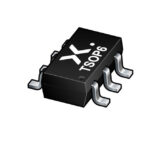 NCR321UX

The activity of extra discounts on wholesale prices is in full swing…
Please fill in your contact information and we will send you the latest wholesale price list.





