 ChipApex | Global Electronic Components Supplier

SEARCH
Search Product
Search Post
— IC芯片 | 连接器 | 传感器 | 被动器件 —
Search productSearch post
— IC芯片 | 连接器 | 传感器 | 被动器件 —
Consult the customer manager about the wholesale price.
consultation hotline:86-132-6715-2157
email:[email protected]
Contact the product manager for consultation. One-stop consultation is available.
Do you want a lower wholesale price? Please send us your inquiry and we will reply immediately.
The NCV3066DR2G is an automotive-grade LED driver IC from onsemi, housed in an 8-SOIC package. It integrates a synchronous buck-boost DC-DC converter capable of delivering up to 1.5 A of switch current for high-power LED applications. The device supports a wide input voltage range from 3 V to 40 V and operates at switching frequencies of either 150 kHz or 250 kHz. It features analog and PWM dimming capabilities and is qualified to AEC-Q100 standards with an operating junction temperature range of -40°C to +125°C.
Verify the specific suffix against official documentation to confirm the exact switching frequency variant (150 kHz or 250 kHz) intended for your design. Ensure that the component meets all required AEC-Q100 specifications for your target automotive application environment. Cross-reference the datasheet revision history for any recent material or packaging changes before finalizing procurement orders.
Select this component when a single-channel solution is required for driving high-current LEDs with variable input voltages. The integrated synchronous switches reduce external component count compared to asynchronous designs. Consider the thermal performance of the SOIC-8 package relative to the expected continuous output current and ambient operating temperatures within the enclosure.
This part belongs to the NCV3066 series of constant current LED drivers designed specifically for automotive use. It serves as a specialized power management solution distinct from general-purpose regulators. The series focuses on providing robust current regulation for high-brightness LED arrays while maintaining compliance with strict automotive quality and reliability standards.
The NCP3066DR2G is the commercial-grade equivalent of this automotive-qualified part. Both share identical electrical characteristics and pinouts but differ in manufacturing qualification standards. Verify that the commercial grade meets the thermal and reliability requirements of your specific application before substituting.
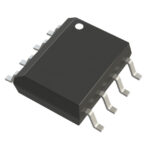 NCV3066DR2G

The activity of extra discounts on wholesale prices is in full swing…
Please fill in your contact information and we will send you the latest wholesale price list.




